


MEDAN – Public discussion has emerged regarding claims that payments made through the Quick Response Code Indonesian Standard (QRIS) will be subject to a new tax. To avoid misunderstandings, it is important to understand the Indonesian government's latest explanation of its digital taxation policy.
The Directorate General of Taxes (DJP), under the Ministry of Finance of the Republic of Indonesia, has introduced the Tax Collection System for Cross-Border Digital Transactions (SPP-TDLN). The policy is regulated under Minister of Finance Regulation (PMK) Number 49 of 2026 and has been implemented since September 25, 2026.
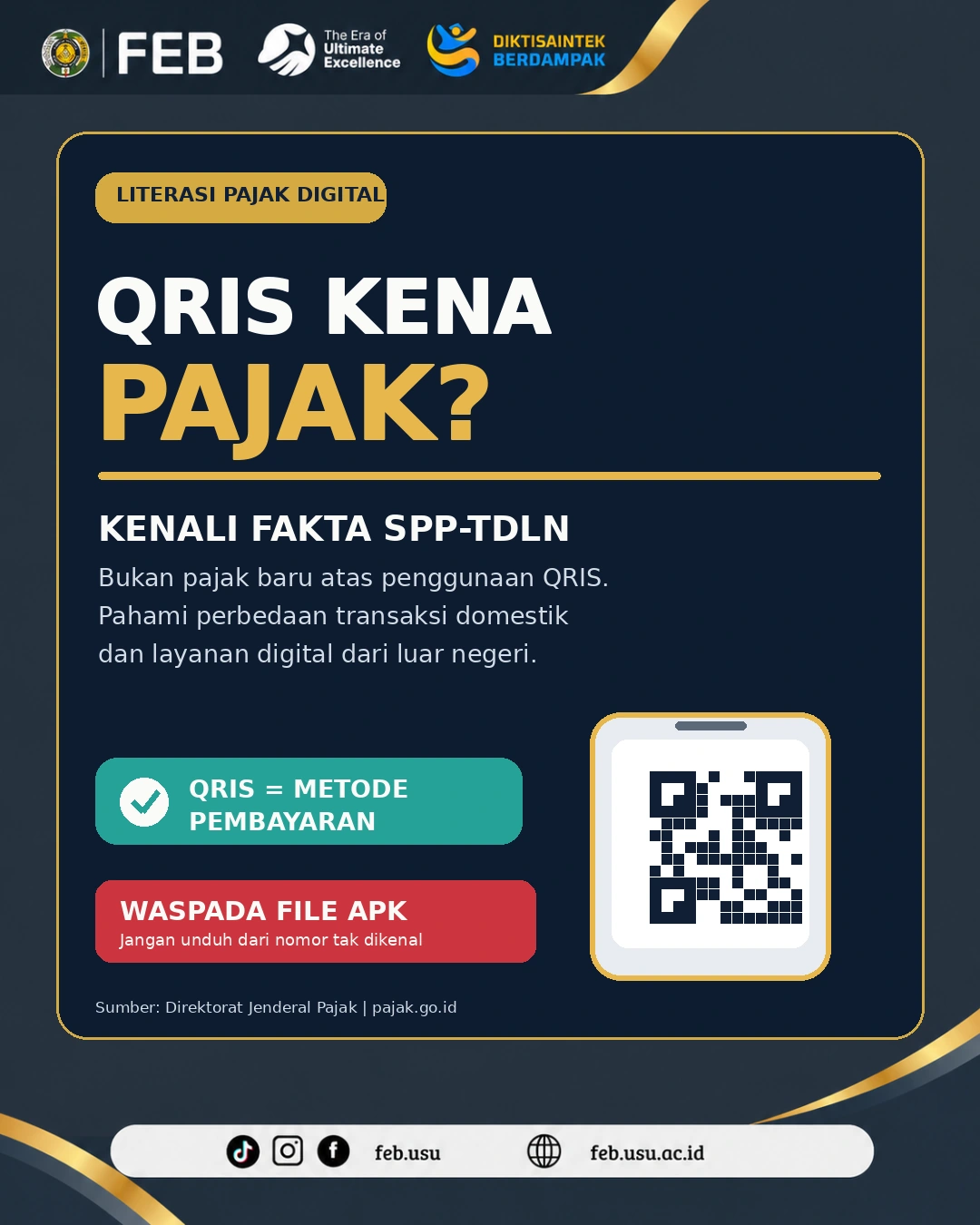
The key point is that SPP-TDLN does not introduce a new tax simply for using QRIS. Instead, it establishes a collection mechanism for Value Added Tax (VAT) on certain digital goods and services originating from abroad and consumed in Indonesia.
What Is SPP-TDLN?
In simple terms, SPP-TDLN is a government mechanism designed to collect VAT on cross-border digital transactions. It complements the existing VAT collection mechanism for Electronic Commerce (PMSE).
Examples of transactions that may fall within the scope of SPP-TDLN include purchasing applications or software from foreign providers, cloud storage services, streaming subscriptions, artificial intelligence (AI) services, digital information, and online game top-ups from overseas providers.
Therefore, the policy focuses on the digital goods or services being consumed and whether they meet the applicable tax requirements, rather than on the payment application used by consumers.
Will QRIS Payments Be Subject to a New Tax?
The answer is no: using QRIS does not, by itself, trigger a new tax.
Domestic QRIS payments, such as purchasing food at a restaurant, paying for coffee at a café, or shopping at a mall, do not automatically fall under SPP-TDLN.
However, this does not mean that all domestic transactions are tax-free. Any tax already applicable to the goods or services purchased remains subject to the relevant tax regulations. QRIS is simply a payment method, not the determining factor for tax liability.
In contrast, purchases of digital goods or services from foreign providers, such as online game top-ups or streaming subscriptions, may fall within the scope of SPP-TDLN if they meet the applicable criteria. Even when a digital payment method is used, the tax treatment is determined by the underlying transaction, not by QRIS itself.
Understanding the Difference Through Everyday Examples
The following examples help illustrate how the system works:
1. Paying for coffee at a café using QRIS
This is a domestic purchase of goods or services. Using QRIS does not make the transaction subject to SPP-TDLN. Any applicable tax continues to follow the regulations governing the business and transaction.
2. Shopping at a mall using QRIS
Similar to paying at a café, using QRIS to purchase goods at a shopping mall does not fall under SPP-TDLN because it does not involve the consumption of digital goods or services from abroad.
3. Purchasing online game credits from a foreign provider
This transaction may fall within the scope of SPP-TDLN because it involves digital goods or services from abroad consumed in Indonesia, provided the applicable tax criteria are met.
4. Paying for a streaming subscription from an overseas provider
Subscriptions to digital services supplied by foreign providers may also fall within the scope of SPP-TDLN, subject to the applicable regulations.
It is important to note that not every foreign transaction is automatically subject to VAT under this system. Transactions for which VAT has already been collected through the existing PMSE mechanism are excluded from duplicate collection under SPP-TDLN.
Why Has the Government Introduced SPP-TDLN?
The development of the digital economy has significantly changed consumer behavior. Today, people can purchase a wide range of digital products and services from foreign companies without conducting face-to-face transactions or receiving physical goods.
These developments require a tax administration system that can adapt to the evolving digital economy. Through SPP-TDLN, the government aims to improve VAT collection efficiency, strengthen the identification of relevant cross-border digital transactions in accordance with regulations, and promote fairer tax treatment between domestic and foreign businesses.
The Directorate General of Taxes has also explained that transaction data supports the mapping and analysis needed to identify transactions subject to VAT. The system is not intended to monitor people's personal bank accounts in general.
Beware of Scams Impersonating the Directorate General of Taxes
In addition to understanding tax regulations, the public should remain alert to digital scams impersonating the Directorate General of Taxes.
One method involves sending APK files through WhatsApp or text messages under various pretenses, including tax return notifications, tax bills, taxpayer identification number updates, or other tax-related information.
The public should avoid downloading or installing APK files sent by unknown numbers. Such files may be used to steal personal information or gain unauthorized access to banking data.
Anyone receiving suspicious messages claiming to represent the Directorate General of Taxes should verify the information through the official Tax Call Center at 1500200 or contact the nearest tax office through official channels.
Digital and Tax Literacy in an Evolving Economy
The introduction of SPP-TDLN demonstrates how technological developments are influencing economic activities and public tax administration. Consumers need to understand not only the convenience of digital transactions but also the relevant regulations, data security considerations, and tax obligations.
For students and the academic community, this issue provides a practical example of how digital transformation influences fiscal policy, consumer behavior, and national economic development.
Further information about SPP-TDLN is available through the official Directorate General of Taxes website: https://www.pajak.go.id/spp-tdln.
Public education on SPP-TDLN and digital transaction security supports SDG 4 (Quality Education) by improving economic, financial, and digital literacy; SDG 8 (Decent Work and Economic Growth) by supporting a healthy and fair digital economic ecosystem; and SDG 16 (Peace, Justice and Strong Institutions) by promoting regulatory awareness, transparency, and accountable tax governance. Greater tax and digital literacy can help build a more informed, critical, and responsible society in the digital era.