


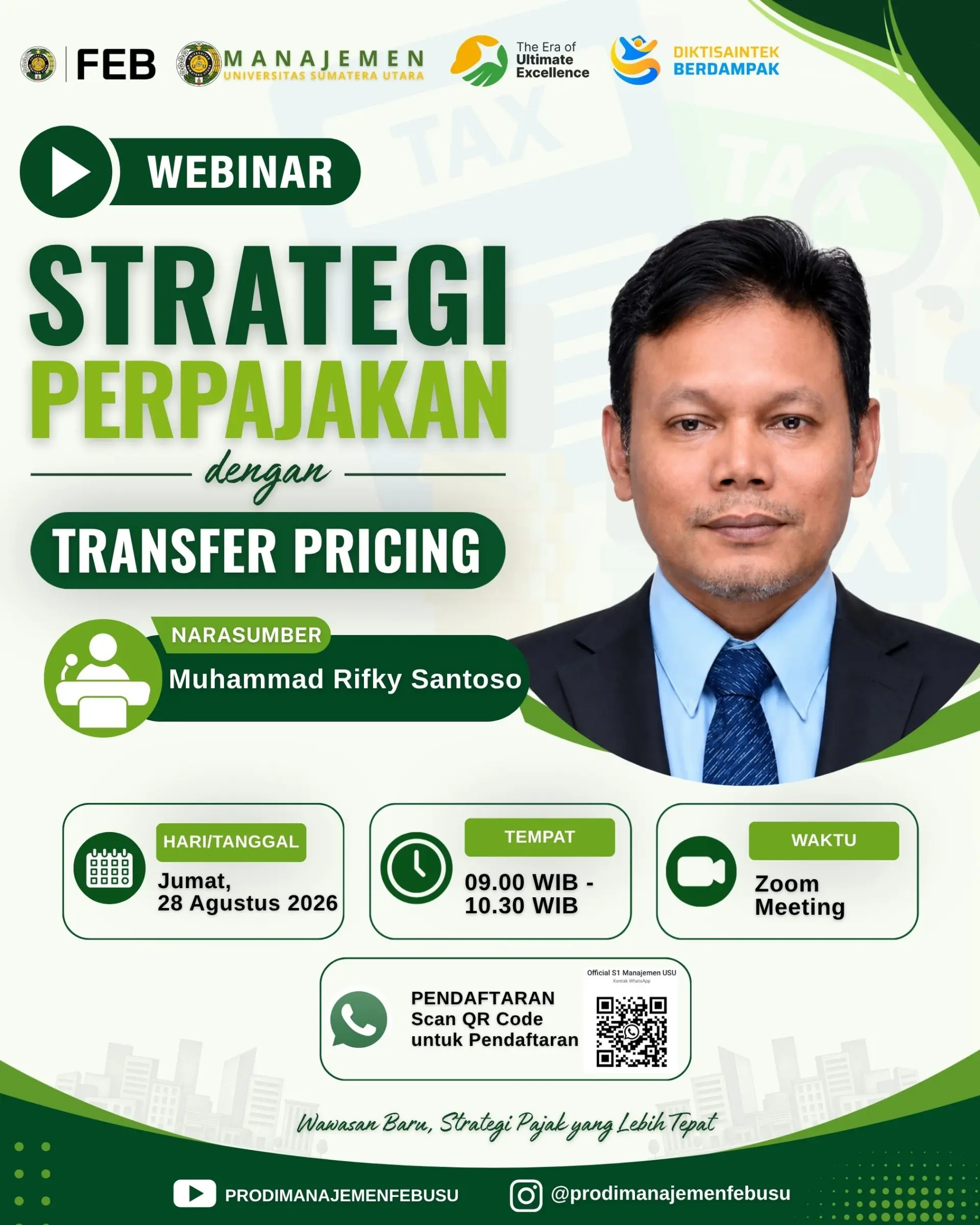
The activity featured Muhammad Rifky Santoso, a speaker from the Medan Financial Training Center, Financial Education and Training Agency (BPPK), Ministry of Finance of the Republic of Indonesia. The webinar aimed to provide students with an understanding of taxation strategies and the application of transfer pricing in business activities.
The material covered the concept of tax planning, the objectives and principles of taxation, as well as transfer pricing in transactions between related companies. The speaker also discussed the application of the arm’s length principle, the importance of documentation, compliance with taxation regulations, and various risks in the application of transfer pricing.
To strengthen participants' understanding, the webinar also discussed several case examples related to affiliated transactions, including sales and purchase transactions, intra-group services, the utilization of intangible assets, interest payments, and share transactions.
As part of the webinar series organized by the Undergraduate Program in Management FEB USU, this activity was one of the efforts to provide learning that is relevant to developments in the business world and professional needs. Through this activity, students are expected to broaden their insights and improve competencies that support their readiness to enter the workforce.
The implementation of this webinar also supports the achievement of the Sustainable Development Goals (SDGs), particularly SDG 4 – Quality Education through enriching learning and increasing students' knowledge of taxation and transfer pricing relevant to business practices, as well as SDG 8 – Decent Work and Economic Growth through increasing understanding of business practices, taxation, and the management of corporate transactions that support economic activities and students' readiness to enter the workforce.
Through this second webinar, the Undergraduate Program in Management FEB USU continues its commitment to providing relevant and applicable academic activities to support the improvement of student competencies and the achievement of sustainable development goals.