


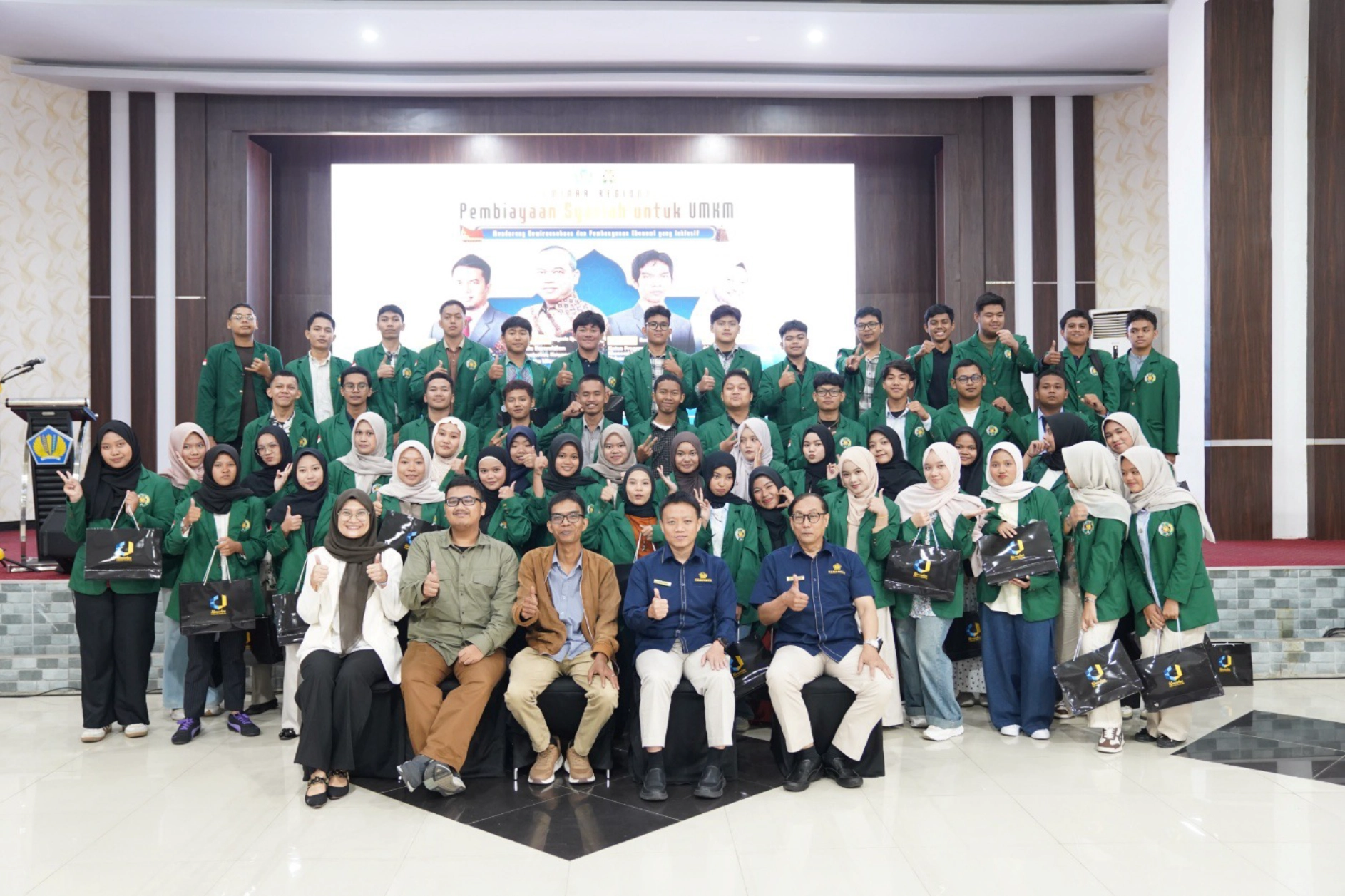
Medan, September 16, 2026 — The Islamic Economics Study Program, Faculty of Economics and Business, Universitas Sumatera Utara (FEB USU), continues to strengthen its contribution to the development of the Islamic economy through the organization of the Regional Seminar “Islamic Financing for MSMEs: Promoting Entrepreneurship and Inclusive Economic Development.”
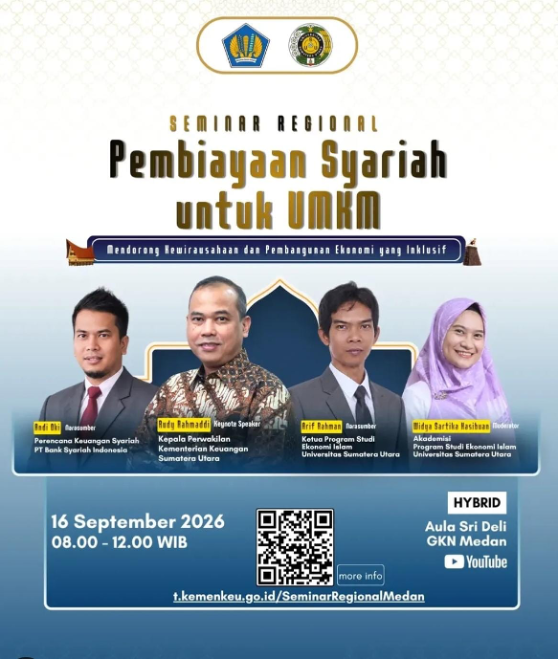
Held in a hybrid format on Wednesday, September 16, 2026, the event took place at the Sri Deli Hall, Medan State Treasury Building (GKN), and was attended by academics, students, MSME representatives, and participants from various backgrounds. The seminar was organized by the Ministry of Finance through the Medan Financial Education and Training Center (BPPK) in collaboration with Universitas Sumatera Utara.
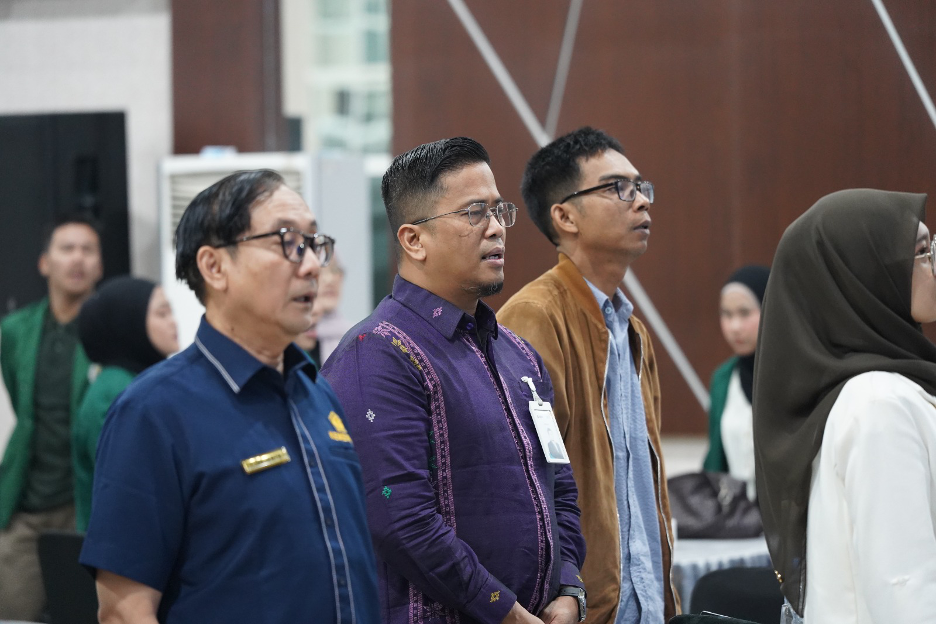
The event was officially opened by Mr. Rudy Rahmaddi, Head of the North Sumatra Regional Office of the Ministry of Finance. The Ministry of Finance’s participation in the forum provided policy and institutional perspectives on the importance of strengthening financing for the MSME sector and promoting entrepreneurship as part of inclusive economic development.
The seminar featured two speakers, namely Andi Oki, M.M., CFP, QWP, a Sharia financial planning practitioner from Bank Syariah Indonesia (BSI), and Dr. Arif Rahman, S.E., M.Ec.Dev., Head of the Islamic Economics Study Program at FEB USU. Both speakers offered complementary perspectives, combining practical insights from the Islamic financial industry with academic perspectives on Islamic financing, MSMEs, and inclusive economic development. The seminar was moderated by Ms. Widya Sartika Hasibuan, an academic and Secretary of the Islamic Economics Study Program at FEB USU.
Addressing Islamic Financing, MSMEs, and Inequality
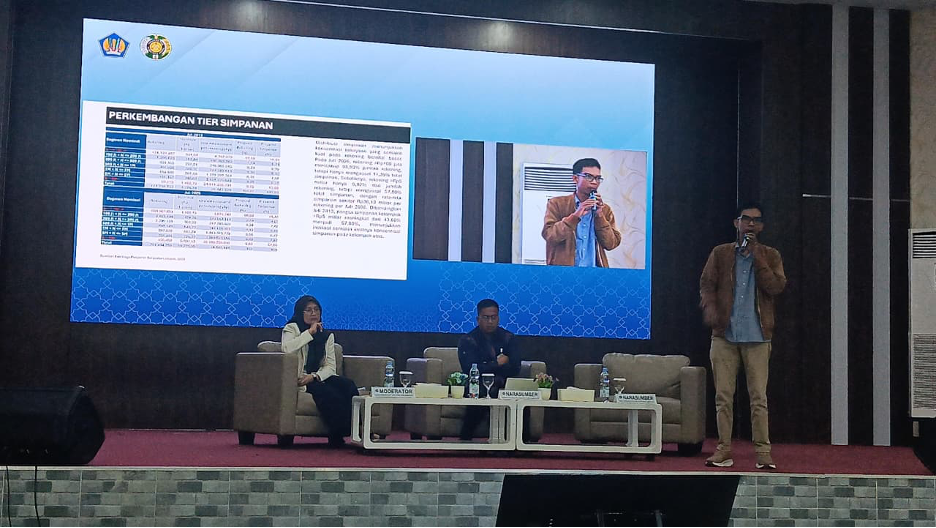
During the seminar, Dr. Arif Rahman presented a topic entitled “Islamic Financing, MSMEs, and Inequality: Towards Inclusive Economic Development.” The presentation explored the relationship between the development of Islamic financing, MSMEs, financial asset accumulation, and the equitable distribution of economic opportunities.
The presentation broadened the perspective on economic inequality, which has traditionally been examined primarily through the distribution of income or expenditure. In his presentation, inequality was also examined from the perspective of the distribution and accumulation of financial wealth, particularly through savings ownership.
This approach also connected the issue of inequality with the perspective of Islamic economics. One of the foundations discussed was Surah Al-Hashr, verse 7, which emphasizes that wealth should not circulate exclusively among the wealthy.
According to the presentation, Islamic financing should not be viewed solely in terms of the growth of the Islamic financial industry. It should also be considered in relation to how such financing can support productive economic activities and expand access to economic opportunities for the wider community.
MSMEs as Part of an Inclusive Economy
The discussion on MSMEs was one of the key topics of the seminar. Islamic financing has a strategic role in supporting working capital needs, investment, and business development for MSMEs.
In his presentation, Dr. Arif Rahman emphasized the importance of directing Islamic financing toward productive activities and the real sector. In this way, financing would not merely be measured by the volume of funds disbursed, but also by its contribution to business development and asset creation.
The presentation also highlighted the importance of expanding financial inclusion. Greater public access to financial services needs to be accompanied by the ability to save, obtain productive financing, and build financial assets.
An Interactive Academic Discussion
The seminar featured an interactive discussion involving academics and participants. Several academics from the Islamic Economics Study Program at FEB USU attended and actively participated in the forum. Dr. Monika Andrasari, a lecturer in the Islamic Economics Study Program at FEB USU, also contributed to the discussion by sharing her views and raising questions during the interactive session.
The active participation of lecturers and participants demonstrated the broad relevance of Islamic financing, MSMEs, and inclusive development, both from academic perspectives and in terms of practical economic development in society.
The forum also served as a platform for knowledge exchange between academics and practitioners in the Islamic financial industry. The participation of Andi Oki from BSI provided practical insights into Islamic financing, while Dr. Arif Rahman’s presentation enriched the discussion through perspectives on research and the development of Islamic economics.
Strengthening the Role of the Islamic Economics Study Program at FEB USU
The involvement of lecturers and the leadership of the Islamic Economics Study Program at FEB USU in the seminar formed part of the program’s efforts to strengthen its role in the development of the Islamic economy, Islamic financing, MSMEs, financial inclusion, and inclusive economic development.
In addition to serving as a forum for disseminating academic ideas, the event also strengthened networks among higher education institutions, government agencies, and the Islamic financial industry. Such cross-sector collaboration is important in promoting the development of an Islamic economy that is not only academically robust but also relevant to the needs of society and the business sector.
Through this initiative, the Islamic Economics Study Program at FEB USU continues to foster an academic environment that is open to collaboration, strengthen Islamic economic literacy, and encourage the development of economic ideas and practices that promote greater access, MSME productivity, and inclusive economic development.