


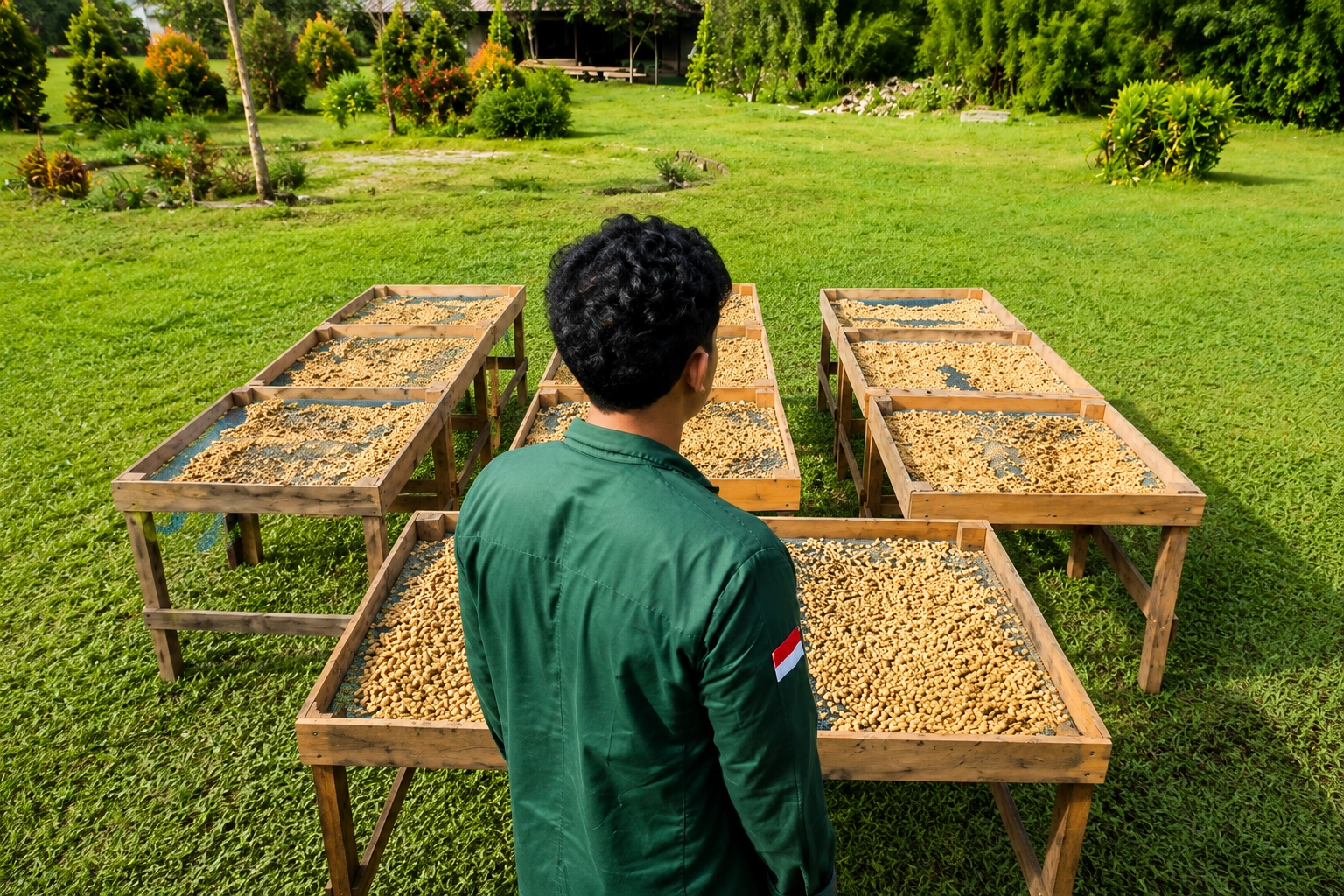
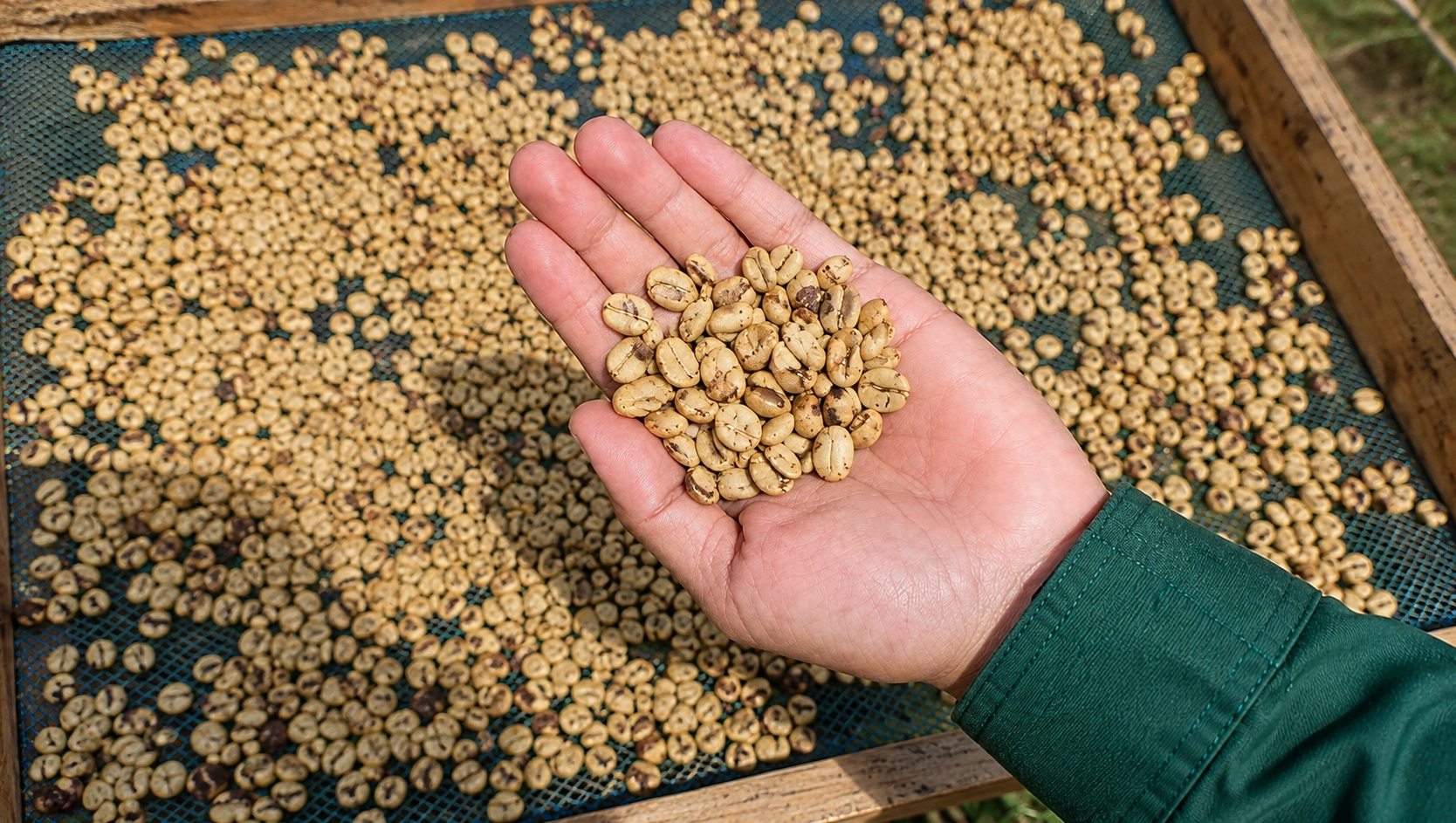
The Community Engagement Program carried out by the FEB USU team has had a positive impact on economic development and capacity building among coffee farmers in Ronggurnihuta Village, Samosir Regency. One of the key outcomes has been an increase in the added value of coffee products. Coffee cherries, which were previously sold for approximately IDR 21,000 per kilogram, have the potential to reach approximately IDR 110,000 per kilogram after being processed into green beans.
This increase in added value is expected to enhance farmers’ income potential while strengthening their independence in managing the coffee value chain. By acquiring the ability to process their harvests independently, farmers have greater opportunities to determine processing and marketing strategies, allowing farmer groups to benefit more optimally from the economic value of their products.
From a technological perspective, the provision of pulping and dry-hulling machines has helped improve post-harvest efficiency and support more standardized coffee processing. Training on controlled fermentation techniques and Good Post-Harvest Practices was also provided to improve the consistency of Arabica coffee quality, particularly the Sigarar Utang variety, and support compliance with Grade 1 green bean standards.
The program has also created opportunities to strengthen market access through collaboration with the Indonesian Diaspora Network of America (IDN-A). This partnership provides insights into export-oriented quality standards while opening opportunities to expand marketing networks for Samosir coffee to the United States and other international markets. The assistance provided has also strengthened the technical skills and post-harvest management capabilities of members of the coffee farmer group.
More broadly, the program strengthens the relationship between higher education institutions and local communities while contributing to sustainable development. The initiative aligns with SDG 2: Zero Hunger, particularly through sustainable agriculture, as well as SDG 8: Decent Work and Economic Growth, through efforts to strengthen farmers’ economic capacity and create added value.
Funded through the Non-PNBP LPPM USU Scheme for Fiscal Year 2026, the program also contributes to the achievement of the university’s Key Performance Indicators (IKU) through student involvement in off-campus learning activities and faculty participation in community-based initiatives.
Moving forward, the FEB USU Community Engagement Team will continue to conduct regular monitoring and evaluation to ensure the sustainable use of the processing equipment while strengthening the capacity and institutional development of coffee farmer groups in Samosir Regency. Through these continued efforts, the program is expected to further increase the added value, competitiveness, and long-term economic sustainability of Samosir’s local coffee industry.