Medan, August 20, 2026 — The Islamic Economics Study Program (Islamic Economics Study Program) of the Faculty of Economics and Business, Universitas Sumatera Utara (FEB USU), in collaboration with the Japan International Cooperation Agency (JICA) and the Regional Development Planning, Research, and Innovation Agency (Bapperida) of North Sumatra Province, conducted a series of activities aimed at strengthening the implementation of the Sustainable Development Goals (SDGs) among Micro, Small, and Medium Enterprises (MSMEs) in North Sumatra.
The series of activities, held on Thursday, August 20, 2026, consisted of an SDGs Business Registration System (BRS) Focus Group Discussion (FGD), an SDGs Simulation Game, and a visit to Bank Sumut. The activities formed part of efforts to strengthen collaboration among higher education institutions, local government, development partners, financial institutions, the business sector, and MSMEs in promoting inclusive and sustainable economic development.
FGD Discusses Strengthening the SDGs Business Registration System
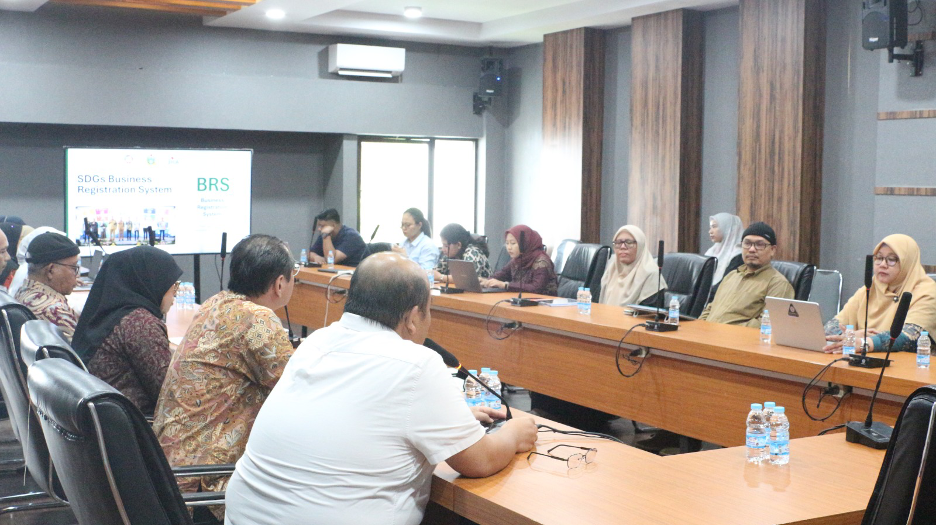
The first activity was an FGD held from 10:00 a.m. to 12:30 p.m. WIB at FEB USU. The FGD discussed the progress and development of the SDGs Business Registration System (BRS) as a platform that connects MSMEs with various stakeholders in support of SDG achievement.
The FGD was attended by representatives of several stakeholders, including Bapperida of North Sumatra Province, Bank Indonesia, the Indonesian Chamber of Commerce and Industry (Kadin), JICA, and MSME representatives participating in the North Sumatra SDGs BRS Program. The FGD aimed to gather input on institutional strengthening, implementation, membership expansion, and follow-up measures for the development of the BRS in North Sumatra.
Wahyu Ario, Head of the Universitas Sumatera Utara SDGs Center, provided an overview of the development of the BRS during the opening session. The BRS was launched in Medan in April 2026 and adapted from practices implemented in Japan, with North Sumatra serving as an initial area for BRS development in Indonesia. The BRS is designed as a platform to connect MSMEs with stakeholders in support of environmental and business sustainability.
The discussion generated several important recommendations. Bapperida of North Sumatra encouraged the integration of MSME data into the BRS and proposed that the BRS be incorporated into regional planning documents, such as the Regional Government Work Plan (RKPD) and the Work Plans of regional government agencies (Renja). In the future, the BRS is also expected to expand beyond MSMEs to include larger businesses and industries.
Meanwhile, Bank Indonesia highlighted the potential integration of MSMEs supported through the Mangulosi Program into the BRS ecosystem. Currently, 107 supported MSMEs from various business sectors have the potential to be developed through such collaboration.
From the business sector, Kadin expressed its commitment to serving as a facilitator connecting the SDGs Center, the Government of North Sumatra Province, JICA, and business actors. Kadin also identified opportunities to develop business matching, expand access to national and international markets, and connect MSMEs with financing sources.
Input from MSME representatives further enriched the discussion, particularly regarding the need for access to financing, business matching, marketing support, and mechanisms to ensure that the BRS program can reach business actors in remote areas across the regencies of North Sumatra.
SDGs Simulation Game as an Alternative Approach to BRS Verification
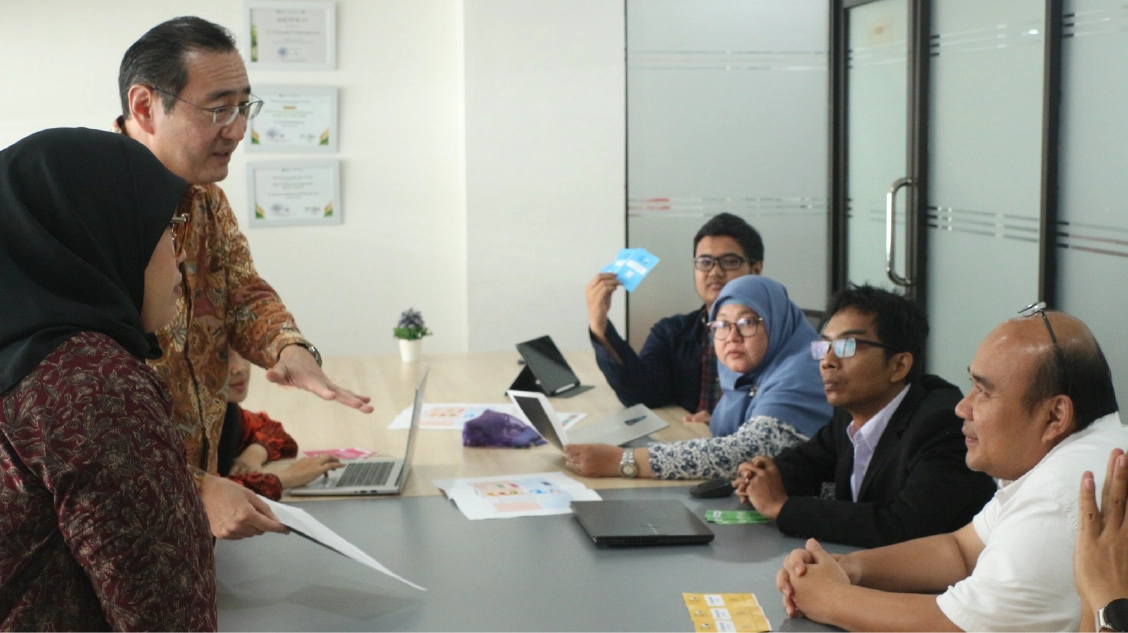
The series of activities continued from 1:30 p.m. to 3:30 p.m. WIB with an SDGs Simulation Game facilitated by JICA at the Seminar Room of the Islamic Economics Study Program, FEB USU.
The simulation was introduced as one potential approach that could be piloted in the future verification process for MSMEs participating in the SDGs BRS. The game-based approach is expected to make the introduction and understanding of SDG principles more interactive, particularly for MSME participants.
The use of a more participatory approach is also in line with one of the outcomes of the FGD, which emphasized the importance of strengthening SDG literacy. During the discussion, JICA highlighted that environmental awareness and green lifestyles need to become part of everyday life so that sustainability principles do not remain limited to programs but are also reflected in individual and community behavior.
Visit to Bank Sumut
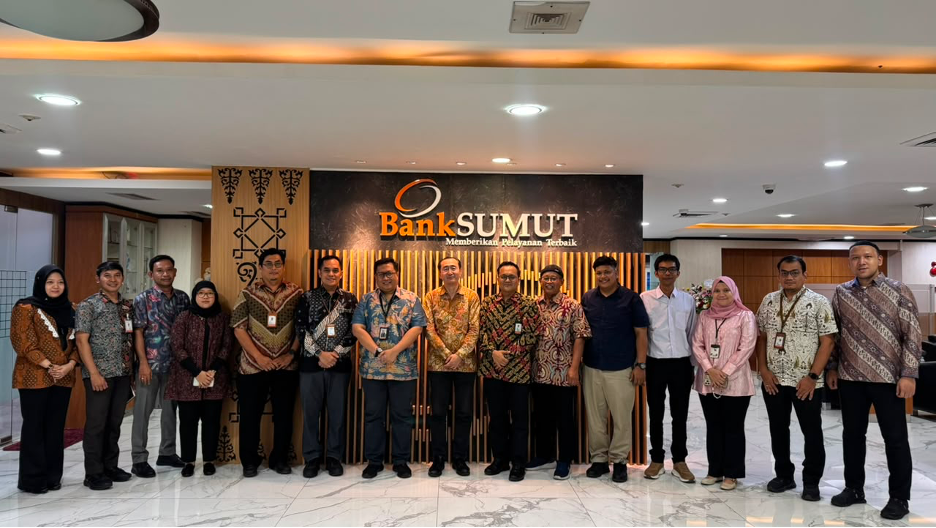
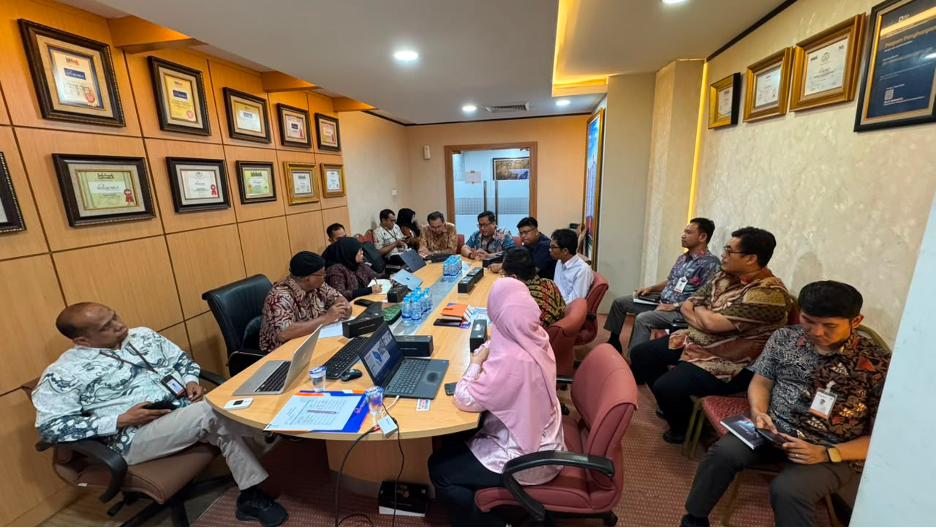
In the afternoon, from 4:00 p.m. to 6:00 p.m. WIB, the activities continued with a visit to Bank Sumut. The visit formed part of efforts to explore stronger collaboration with the banking sector, particularly in supporting MSMEs’ access to financing and business development.
Financing was one of the key issues raised during the FGD. MSME representatives highlighted their need for financial support, while the discussion also identified opportunities for collaboration with local banks to strengthen access to financing for BRS members.
Building an Inclusive and Sustainable MSME Ecosystem
The series of activities demonstrated that strengthening SDG implementation among MSMEs requires an approach that goes beyond business registration and data collection. It also needs to encompass mentoring, financing, market access, business matching, SDG literacy, and behavioral changes that support sustainability.
The FGD emphasized the importance of collaboration among local government, Bank Indonesia, Kadin, JICA, higher education institutions, banks, and MSMEs to ensure that BRS implementation can reach more sectors and regions while generating sustainable impacts.
Moving forward, BRS development will focus on expanding networks across various regencies and cities, integrating supported MSMEs, conducting field visits, increasing SDG literacy among younger generations, and strengthening cooperation in business matching, market access, financing, and MSME mentoring.
The activities also strengthened the role of the Islamic Economics Study Program at FEB USU in building collaborative initiatives that connect sustainable development values with economic development and MSME empowerment. Through collaboration with JICA, Bapperida, the USU SDGs Center, financial institutions, the business sector, and other stakeholders, the Islamic Economics Study Program is expected to continue contributing to the development of an economy that is inclusive, sustainable, and aligned with the principles of Islamic economics.