


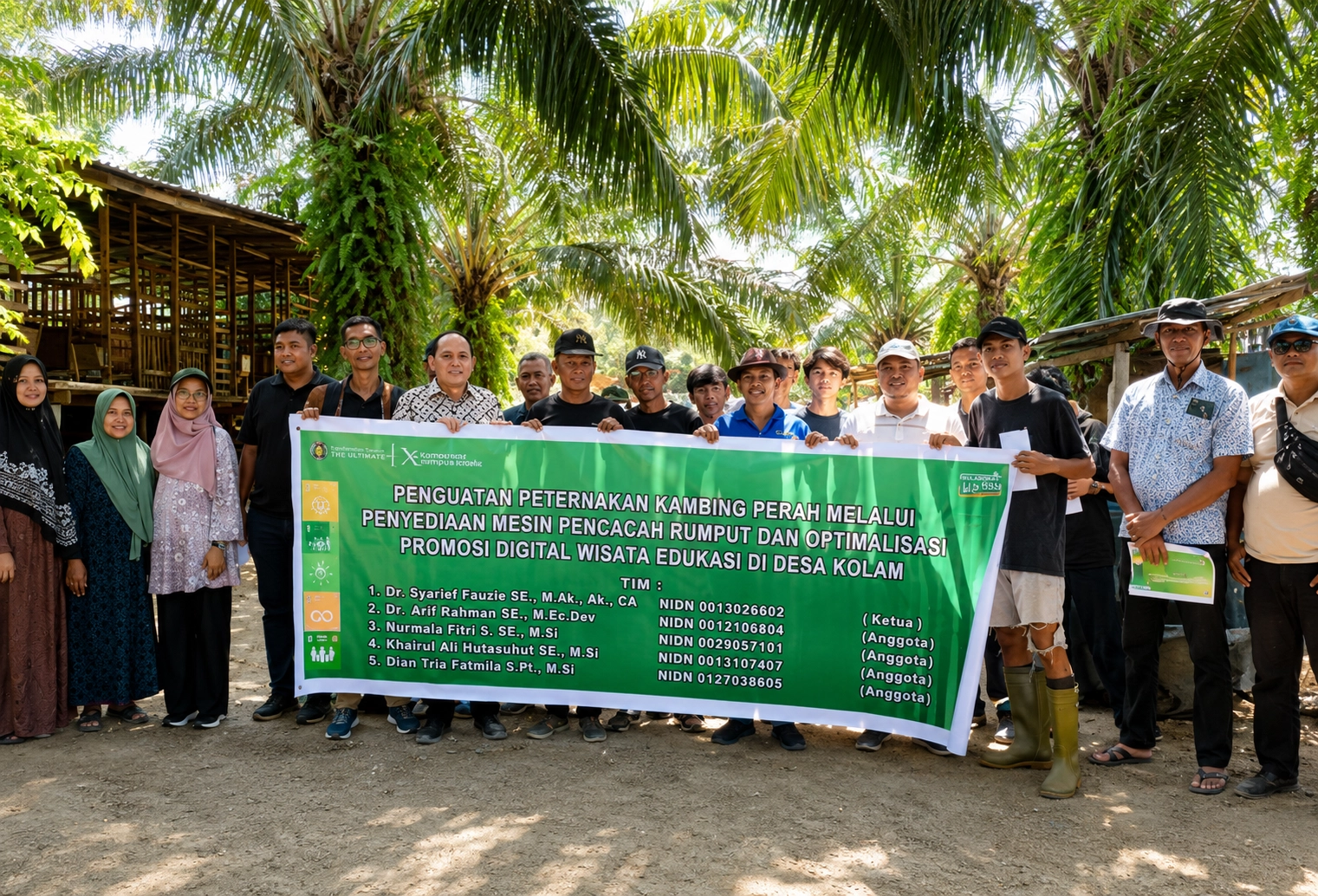
The Community Service Team of the Islamic Economics Study Program, Faculty of Economics and Business, Universitas Sumatera Utara (FEB USU), carried out a community empowerment program at Lesehan Wisata Ternak Desa Kolam in Percut Sei Tuan District, Deli Serdang Regency. The program focused on strengthening the dairy goat farming business through the implementation of circular economy principles, the utilization of agricultural and livestock waste, and the enhancement of digital-based promotion.
The program was led by Dr. Syarief Fauzie, S.E., M.Ak., Ak., CA, with team members Dr. Arif Rahman, S.E., M.Ec.Dev., Nurmala Fitri S., S.E., M.Si., Khairul Ali Hutasuhut, S.E., M.Si., and Dian Tria Fatmila, S.Pt., M.Si. The program also involved students Hanna R. Priscilla Hutagalung, Renta Sitanggang, and Ribka Theresia Gabriella Siagian, who participated in field activities and community assistance.
Lesehan Wisata Ternak Desa Kolam, managed by Mr. Sunimin, is a dairy goat farming enterprise with potential for development as an educational tourism destination. The business produces fresh milk while also generating livestock waste in the form of goat manure. Meanwhile, agricultural waste from corn cultivation, including stalks, leaves, and cobs available in the surrounding Desa Kolam area, had not been optimally utilized.
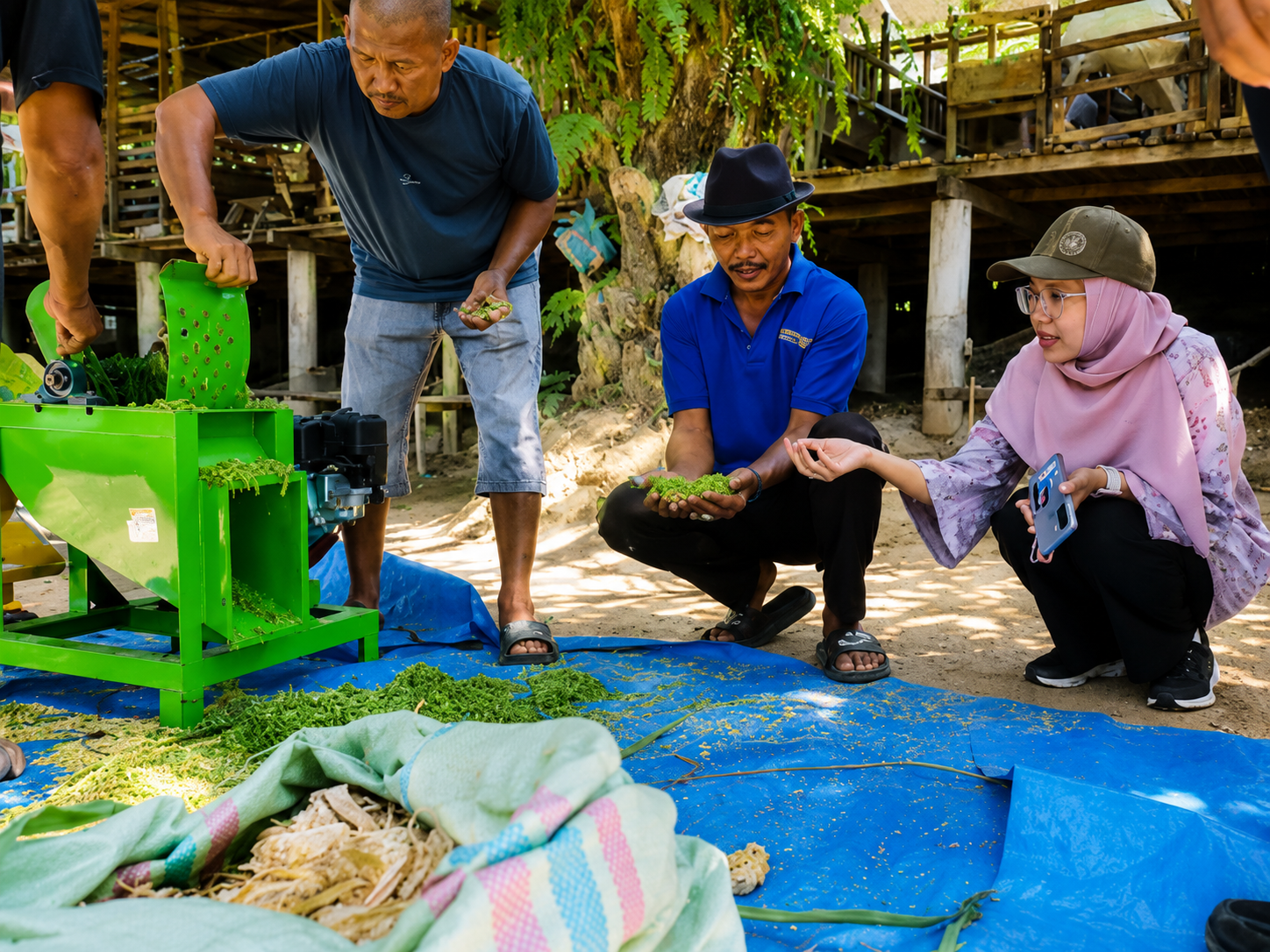
To address these challenges, the Community Service Team of the Islamic Economics Study Program at FEB USU implemented a circular economy approach through three main initiatives. First, the team provided a forage chopper to process corn agricultural waste into livestock feed. Second, training was conducted on processing goat manure into organic fertilizer. Third, the team provided training on the use of social media to strengthen the promotion of the livestock business and its educational tourism activities.
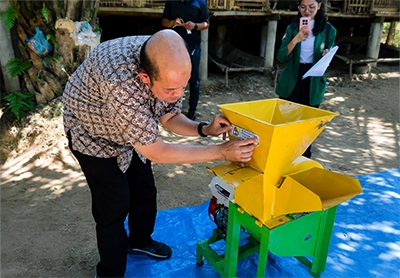
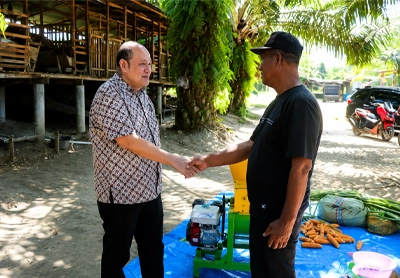
The program began with a survey and an assessment of the partner's needs, particularly in relation to feed supply, waste management, and promotional strategies. The team subsequently handed over the forage chopper and provided training on its operation, operational safety, and maintenance. Through this technology, corn agricultural waste that had previously gone unused can be processed into livestock feed.
The team also conducted training on processing goat manure into organic fertilizer through demonstrations and hands-on practice, covering the stages from material preparation and mixing to fermentation and curing. This activity is expected to help the partner transform livestock waste into a resource that can be reused for agricultural purposes and potentially developed into a value-added product.
In addition to strengthening production and waste management, the FEB USU Community Service Team provided digital promotion assistance to the partner. The training included the creation of simple photographs and videos featuring farming activities, milk production, feeding practices, educational tourism activities, and various products generated by the business. Social media platforms such as Instagram, Facebook, and YouTube were introduced as tools to expand promotional reach and attract more consumers and visitors.
Through this program, the Community Service Team of the Islamic Economics Study Program at FEB USU hopes that the partner's dairy goat farming enterprise will continue to develop in a more productive and sustainable manner. The implementation of circular economy principles is expected to optimize resource utilization, reduce waste, create added value, and strengthen the competitiveness of the livestock business and educational tourism activities in Desa Kolam.