


.webp)
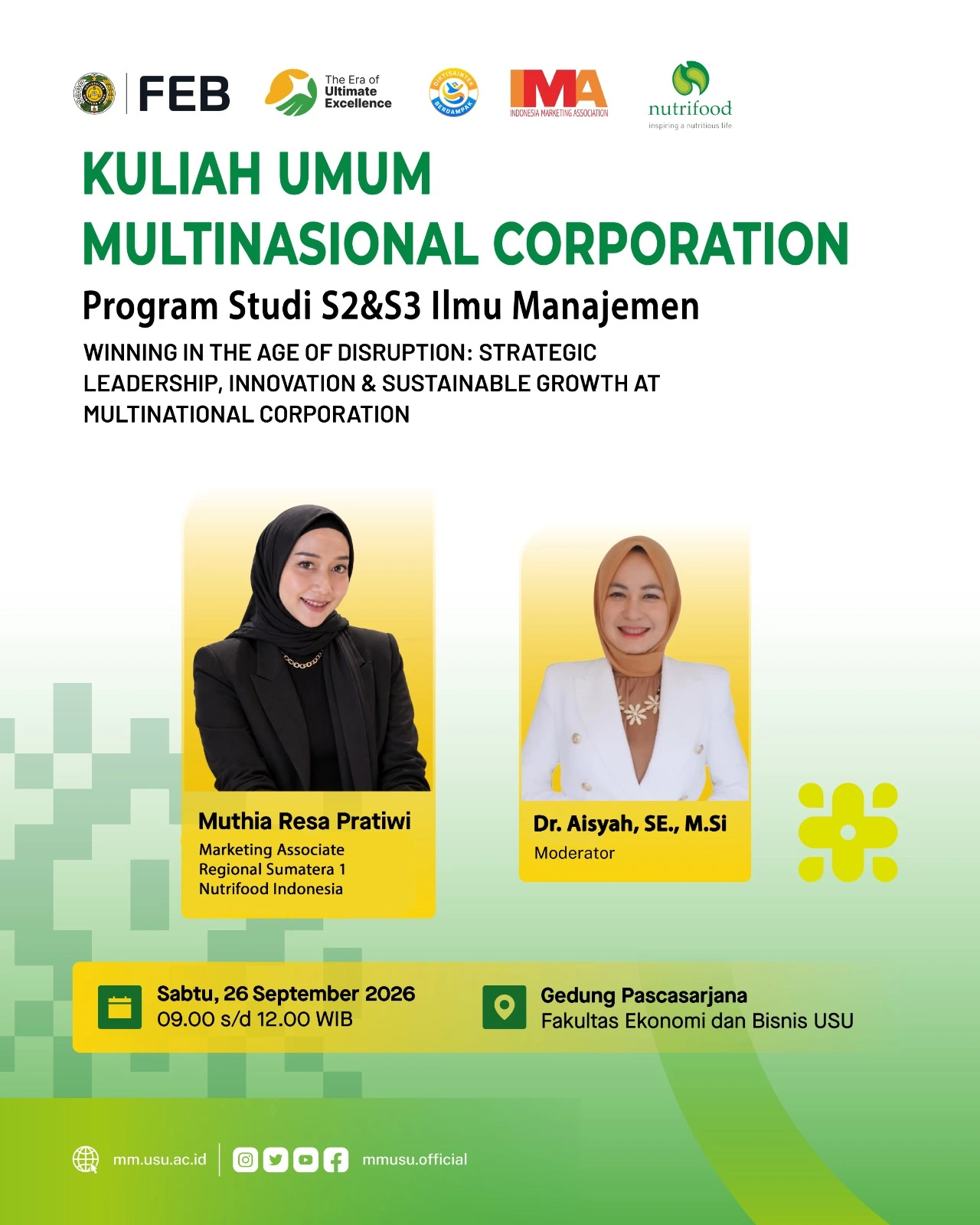
The public lecture highlighted the importance of strategic leadership, innovation, and sustainable growth for multinational corporations in navigating the era of disruption. The dynamic changes in the business environment require companies to adapt, develop appropriate strategies, and create innovations to maintain their competitiveness. Through this topic, students gained perspectives on the challenges and opportunities faced by companies in implementing business strategies amid continuous change.
The participation of an industry practitioner provided students with an opportunity to broaden their understanding of how management principles are applied in the workplace. In addition to enriching their academic knowledge, the public lecture was expected to encourage students to develop strategic thinking, improve their adaptability, and understand the importance of innovation and sustainability in business decision-making.
 |
The organization of this public lecture was part of the efforts of the Master's and Doctoral Programs in Management Science, FEB USU, to support learning that is relevant to developments in the business and industrial sectors. Interaction between the academic community and industry practitioners is expected to strengthen the connection between management theory and practice while providing opportunities for students to broaden their professional perspectives in facing future business challenges.
This activity also supports the achievement of the Sustainable Development Goals (SDGs) 4: Quality Education through the enrichment of knowledge and improvement of learning quality in line with workforce needs. Furthermore, the activity aligns with SDG 17: Partnerships for the Goals through collaboration between higher education institutions and the industrial sector to strengthen connections between academia and business. Thus, this public lecture is expected to contribute positively to the development of students' competencies and strengthen the role of higher education in preparing adaptive, innovative, and competitive human resources.