


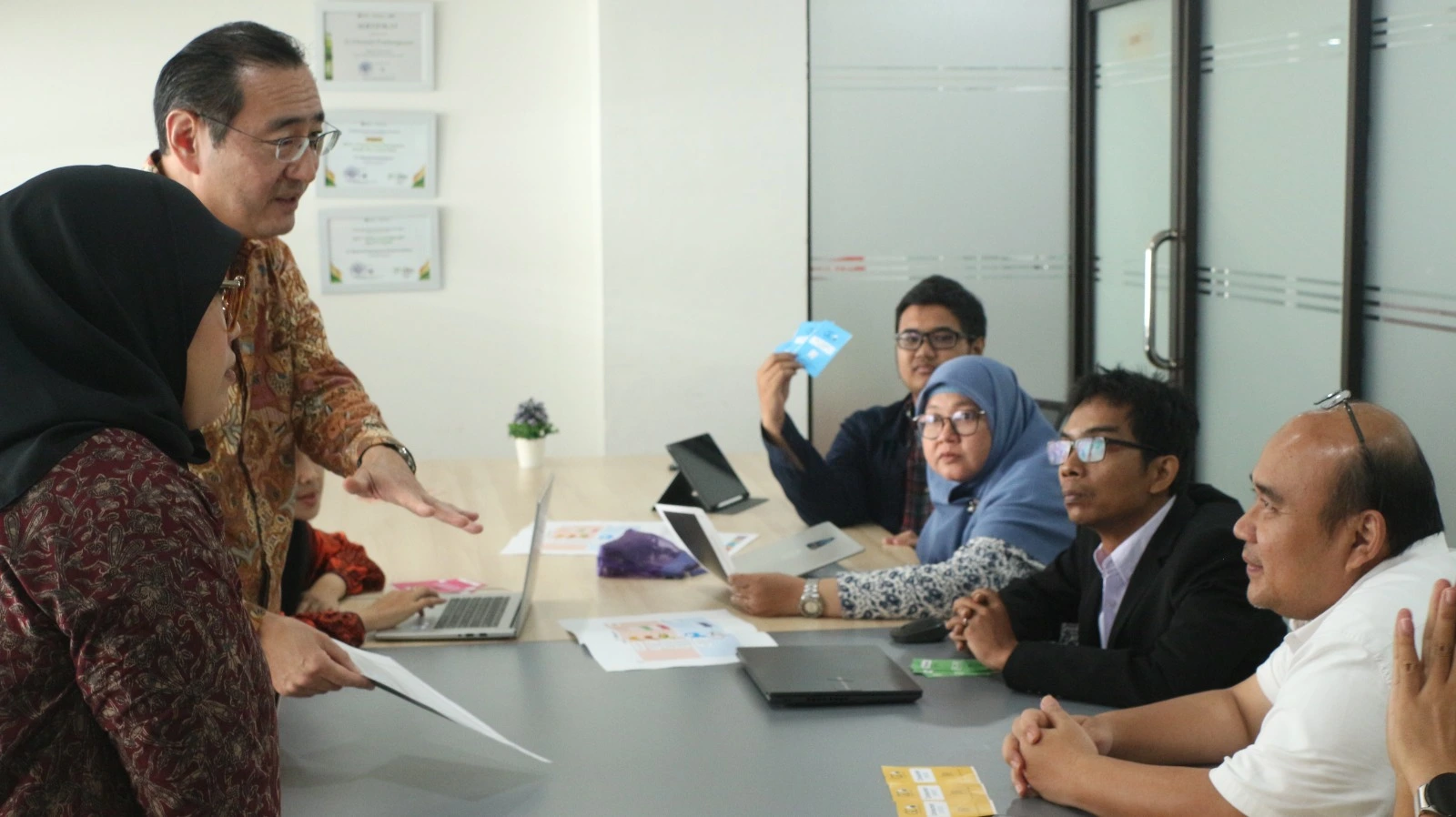
The Undergraduate Islamic Economics Study Program at the Faculty of Economics and Business, Universitas Sumatera Utara (FEB USU), has established a strategic collaboration with the Japan International Cooperation Agency (JICA) to promote the development of halal Micro, Small, and Medium Enterprises (MSMEs) and strengthen Islamic Economics education based on the Sustainable Development Goals (SDGs). This initiative reflects the university's commitment to advancing inclusive economic growth, responsible business practices, and sustainable development through international partnerships.
The collaboration was formalized through the signing of an Implementation Arrangement (IA) on August 21, 2026, in Medan. The agreement was signed by Hisaki Mitsui, representing JICA, and Dr. Abdillah Arif Nasution, Dean of FEB USU. The implementation of this collaborative initiative involves the Undergraduate Islamic Economics Study Program, coordinated by its Head, Dr. Arif Rahman, S.E., M.Ec.Dev.
The initiative focuses on enhancing knowledge and practical understanding of halal MSME development by integrating Islamic economic principles with sustainability considerations. Beyond compliance with Islamic business ethics, the program emphasizes the importance of social responsibility, environmental awareness, and long-term business sustainability in supporting inclusive economic development.
As part of its implementation, the program incorporates educational presentations and interactive discussions addressing Corporate Social Responsibility (CSR), sustainable procurement, and the identification of social and environmental risks in economic decision-making. Case-based learning activities are also introduced to encourage participants to critically examine how business decisions influence community welfare, environmental sustainability, and long-term economic outcomes.
In addition to strengthening halal MSME development, the collaboration aims to enhance Islamic Economics educational content by incorporating SDG-oriented perspectives into academic learning. This approach is expected to broaden participants' understanding of how Islamic economic values, particularly justice, ethical responsibility, and social welfare, can contribute to addressing contemporary global development challenges.
The initiative contributes to several Sustainable Development Goals, particularly SDG 4 (Quality Education), SDG 8 (Decent Work and Economic Growth), SDG 12 (Responsible Consumption and Production), and SDG 17 (Partnerships for the Goals). These goals highlight the importance of capacity building, sustainable entrepreneurship, responsible economic practices, and international cooperation in achieving inclusive and sustainable development.
Through this collaboration, the Undergraduate Islamic Economics Study Program at FEB USU reaffirms its commitment to integrating education, research, and community engagement with sustainable development priorities. The partnership with JICA is expected to provide a foundation for strengthening the capacity of halal MSMEs while advancing Islamic Economics education that is responsive to both local economic needs and global sustainability challenges.