


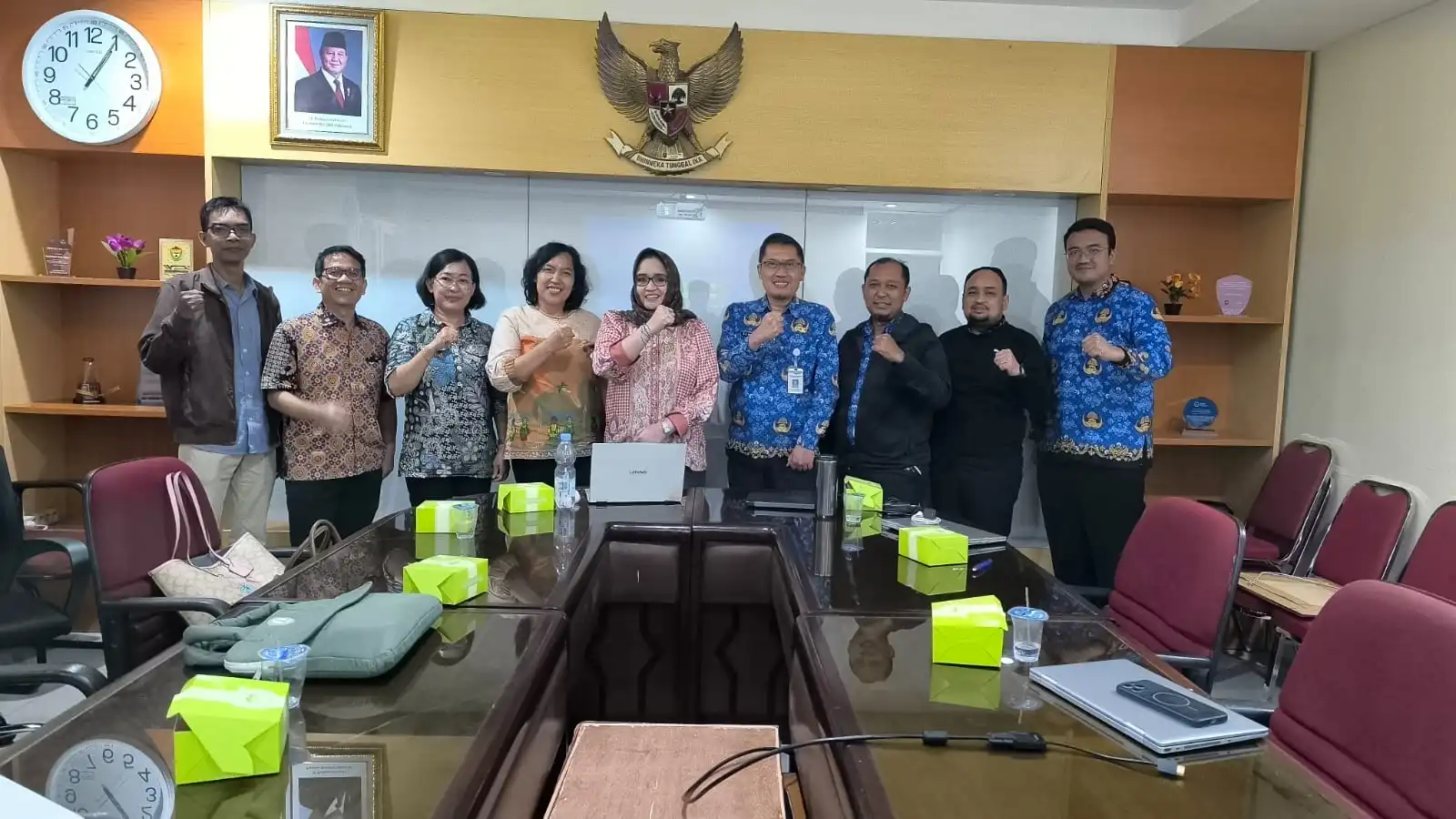
JAKARTA – Dr. Arif Rahman, S.E., M.Ec.Dev., Head of the Undergraduate Study Program in Islamic Economics at the Faculty of Economics and Business, Universitas Sumatera Utara (FEB USU), participated in coordination activities concerning the revision of the North Sumatra Province Regional Medium-Term Development Plan (RPJMD) for 2025–2029, held in Jakarta from November 16 to 18, 2026.
The activities were part of the North Sumatra Provincial Government's efforts, through the Regional Development Planning, Research, and Innovation Agency (Bapperida), to strengthen coordination in revising the regional development planning document. Dr. Arif Rahman was officially assigned alongside Tapi Sari Rumonda Bulan Siregar, S.S., S.E., Ak., Head of the Development Planning, Control, and Evaluation Division (PPEPD) at Bapperida of North Sumatra Province.
The coordination process for revising the North Sumatra Province RPJMD for 2025–2029 plays a strategic role in aligning regional development policies, priorities, and objectives. This process is essential to ensuring that development planning remains relevant to evolving socioeconomic conditions, community needs, and the dynamics of national and regional development policies.
Dr. Arif Rahman's involvement as Head of the Undergraduate Study Program in Islamic Economics at FEB USU reflects the contribution of academia to regional development planning and policymaking. His participation also demonstrates the role of higher education institutions in bridging academic perspectives with the practical needs of public administration, particularly by strengthening approaches to development economics, policy analysis, and sustainable development planning.
Through these coordination activities, the revision of the North Sumatra Province RPJMD for 2025–2029 is expected to become more focused, integrated, and responsive to various development challenges. Synergy between local governments and academics is an important element in promoting evidence-based development policies aimed at improving community welfare.
The participation of the Head of the Undergraduate Study Program in Islamic Economics at FEB USU also demonstrates the university's contribution to regional development while supporting the implementation of the Three Pillars of Higher Education (Tri Dharma Perguruan Tinggi), particularly through the application of academic knowledge and expertise to serve the interests of society and government.
This collaboration also aligns with the commitment to achieving the Sustainable Development Goals (SDGs), particularly SDG 8 (Decent Work and Economic Growth) by supporting policy planning that promotes inclusive and sustainable economic growth; SDG 9 (Industry, Innovation, and Infrastructure) by strengthening research- and innovation-based approaches to development planning; SDG 11 (Sustainable Cities and Communities) by contributing to integrated and sustainable regional development planning; SDG 16 (Peace, Justice, and Strong Institutions) by strengthening evidence-based, transparent, and accountable policymaking processes; and SDG 17 (Partnerships for the Goals) by fostering strategic collaboration between higher education institutions and local governments. This collaboration is expected to enhance the quality of regional development planning in North Sumatra Province, making it more inclusive, adaptive, and oriented toward improving community welfare.