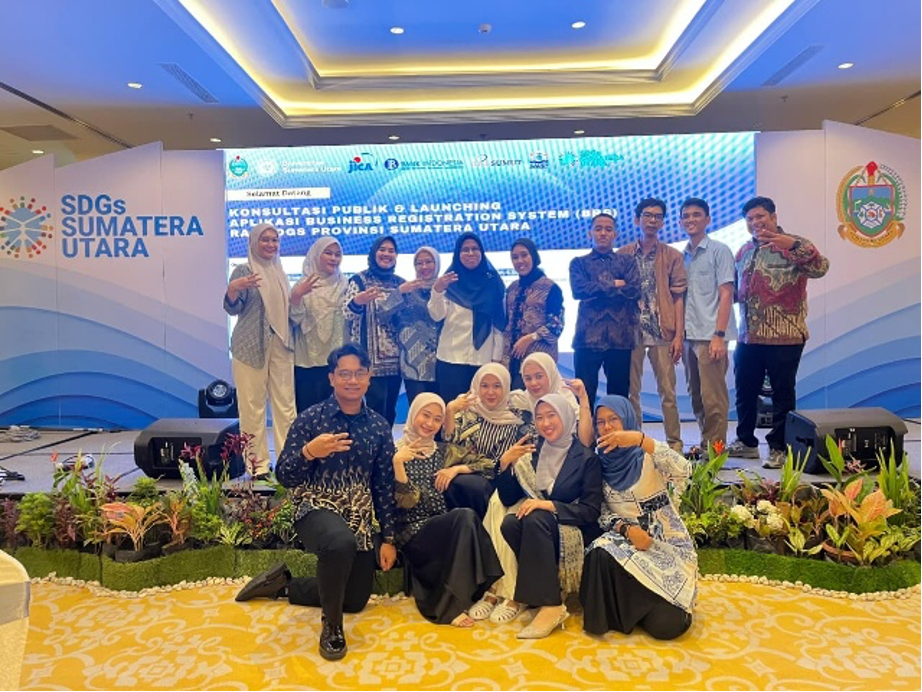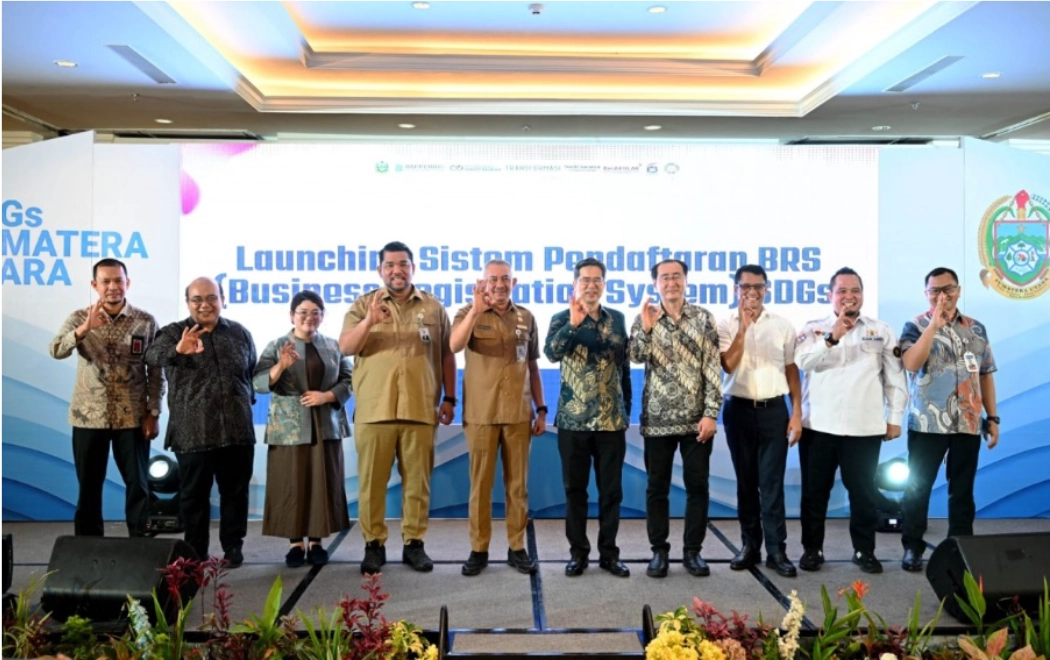
A lecturer from the Islamic Economics Study Program, Faculty of Economics and Business, Universitas Sumatera Utara (FEB USU), took part in the Public Consultation on the Initial Draft of the Regional Action Plan (RAD) for the Sustainable Development Goals (SDGs) of North Sumatra Province for 2026–2030, as well as the Launch of the Business Registration System (BRS) for the SDGs. The event was held at Hotel Adimulia Medan on Monday, April 6, 2026.
The event was organized in collaboration between the North Sumatra Provincial Government, Universitas Sumatera Utara through the USU SDGs Center, and the Japan International Cooperation Agency (JICA).
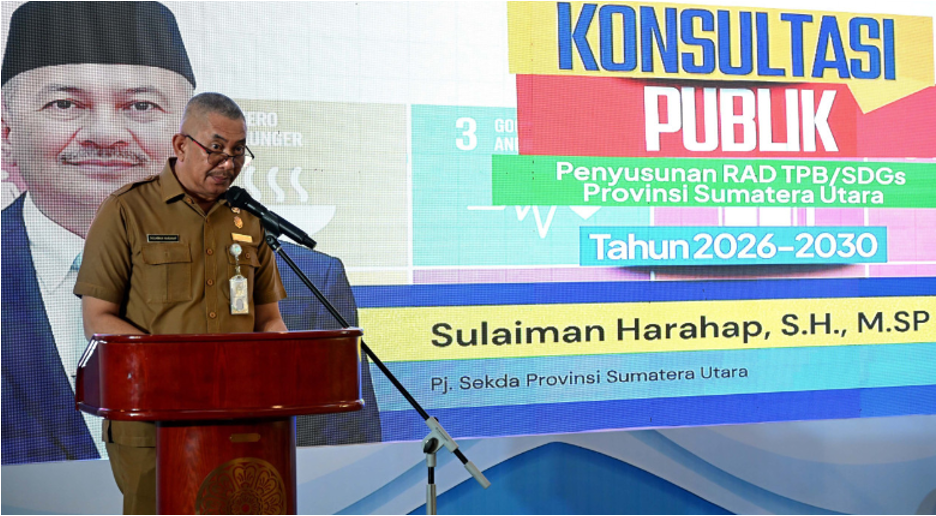
Dr. Wahyu Ario Pratomo, S.E., M.Ec., a lecturer from the Islamic Economics Study Program, FEB USU, served as one of the speakers, while Wahyu Sugeng Imam Soeparno, S.E., M.Si., served as the moderator. The discussion focused on the development of the RAD for the SDGs 2026–2030 using a data- and evidence-based policy approach.
The event also introduced the Business Registration System (BRS) for the SDGs, a digital platform designed to integrate private-sector contributions into the achievement of sustainable development targets. The system is expected to strengthen collaboration between the government, business sector, and other stakeholders in supporting the implementation of the SDGs in North Sumatra.
The USU team involved in the preparation of the RAD for the SDGs 2026–2030 was established through Decree of the Head of the USU Research Institute No. 4455.6/UN5.4.10.K/PT.01.05/2026, dated February 18, 2026. The team consists of Dr. Arif Rahman as Team Leader and Regional Planning Expert; Dr. Monika Andarasari as Public Policy Expert; Khairul Ali Hutasuhut as Islamic Economics Expert; Irsad as Environmental Economics Expert; and Sukma Hayati Hakim as Supporting Expert.
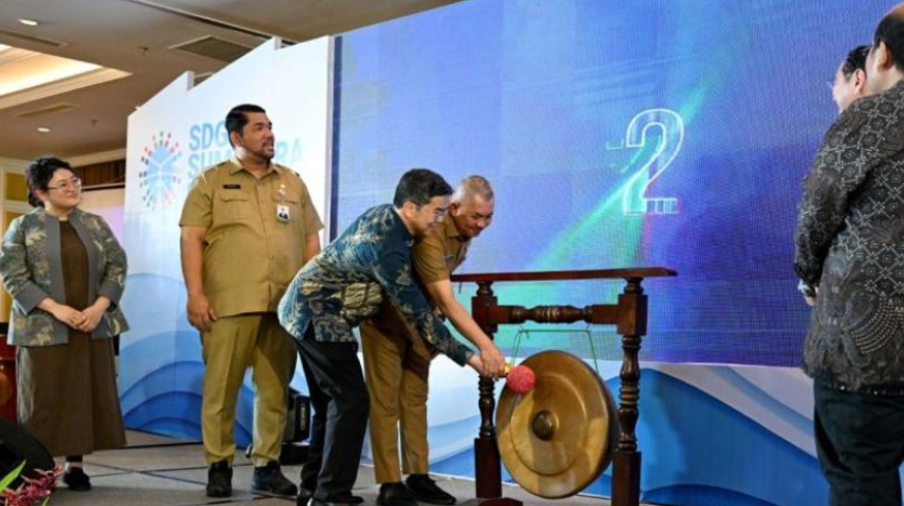
The BRS for the SDGs was presented as the first digital business registration system in Indonesia to integrate business activities with sustainable development targets. As of the event, 199 businesses had registered, with a target of reaching 500 MSMEs in 2026.
JICA also expressed its appreciation for the implementation of the BRS for the SDGs and viewed the initiative as a potential model that could be adopted by other provinces. Through this initiative, FEB USU and USU are expected to continue strengthening their contribution to sustainable development through research, policy development, and collaboration with various stakeholders.