


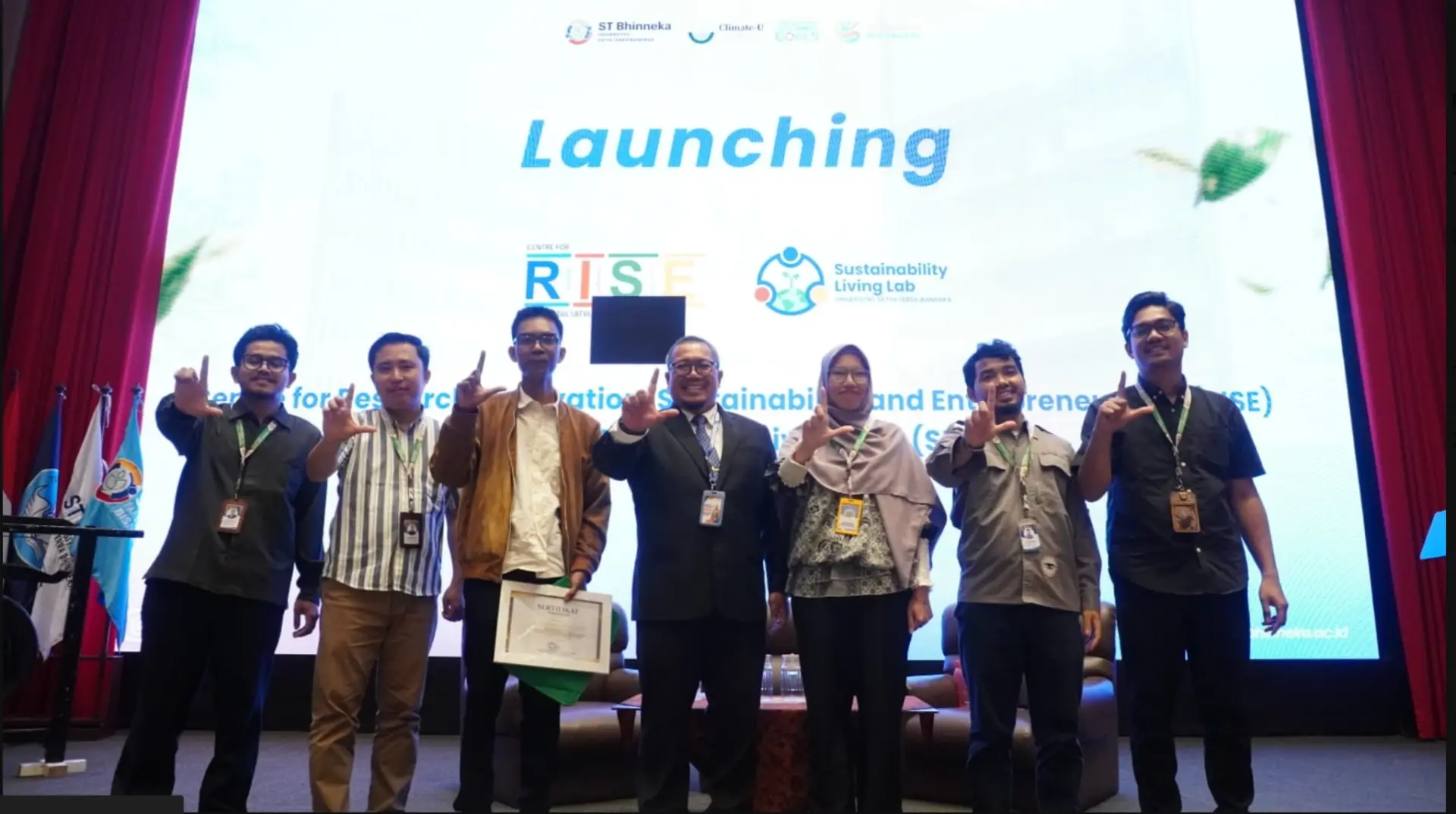
MEDAN – Dr. Arif Rahman, S.E., M.Ec.Dev., Head of the Undergraduate Study Program in Islamic Economics at the Faculty of Economics and Business, Universitas Sumatera Utara (FEB USU), participated as a speaker in the talk show "Launching RISE (Center for Research, Innovation, Sustainability and Entrepreneurship) and SLL (Sustainability Living Lab)", hosted by Universitas Satya Terra Bhinneka on Wednesday, July 1, 2026, from 1:30 p.m. to 3:00 p.m. (West Indonesian Time).
During the event, Dr. Arif Rahman delivered a presentation entitled "The Role of Universities as Centers of Excellence in Accelerating the Achievement of the SDGs by 2030." His presentation emphasized the strategic role of higher education institutions as centers for knowledge development, research, innovation, and collaboration in supporting the achievement of the 17 Sustainable Development Goals.
The launch of RISE and the Sustainability Living Lab marked an initiative by Universitas Satya Terra Bhinneka to strengthen an academic ecosystem focused on research and sustainable development. Both initiatives are expected to provide collaborative platforms bringing together academics, students, government institutions, businesses, and communities to develop solutions to contemporary development challenges.
In his presentation, Dr. Arif Rahman emphasized the importance of transforming universities from institutions primarily focused on education and academic publications into centers of excellence capable of generating meaningful societal impact. Such transformation can be pursued by integrating the SDGs into curricula, research, campus governance, community engagement, and the development of sustainable innovation and entrepreneurship.
The talk show also featured Benny Iskandar, S.T., M.T., from the Regional Research and Innovation Agency (BRIDA) of the Medan City Government, and involved lecturers and students from Universitas Satya Terra Bhinneka. The participation of multiple stakeholders highlighted the importance of collaboration between universities and regional governments in translating sustainable development agendas into policies, programs, and initiatives that address community needs.
Dr. Arif Rahman's participation as Head of the Undergraduate Study Program in Islamic Economics at FEB USU reflects the contribution of academia to strengthening the role of higher education in sustainable development. From an Islamic economics perspective, the achievement of the SDGs is closely associated with the principles of economic justice, public welfare, social responsibility, and sustainable resource utilization.
Through this forum, universities were encouraged to expand institutional collaboration and develop knowledge-based approaches to addressing development challenges. The establishment of RISE and the Sustainability Living Lab is expected to strengthen the implementation of the Three Pillars of Higher Education (Tri Dharma Perguruan Tinggi) while creating opportunities for social innovation, collaborative research, and entrepreneurship development that benefit society.
This initiative also aligns with the Sustainable Development Goals (SDGs), particularly SDG 4 (Quality Education) by integrating sustainability principles into education and academic capacity development; SDG 9 (Industry, Innovation, and Infrastructure) by strengthening research and innovation as instruments for sustainable development; SDG 16 (Peace, Justice, and Strong Institutions) by promoting accountable and knowledge-based institutional governance; and SDG 17 (Partnerships for the Goals) through strategic collaboration among universities, governments, businesses, and communities. Such synergy is expected to reinforce the role of universities as centers of excellence in accelerating the achievement of the SDGs by 2030.