


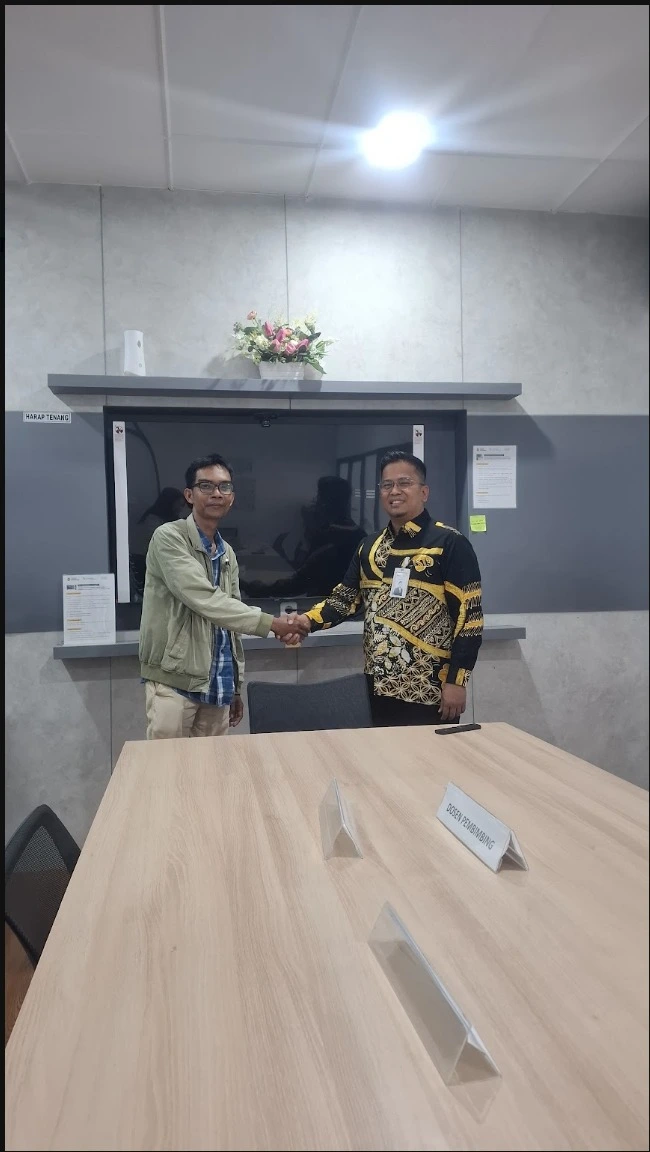
MEDAN – Dr. Arif Rahman, S.E., M.Ec.Dev., Head of the Undergraduate Study Program in Islamic Economics at the Faculty of Economics and Business, Universitas Sumatera Utara (FEB USU), held a discussion on Islamic finance with Andi Oky, Islamic Ecosystem Business Solutions Deputy/Manager at PT Bank Syariah Indonesia Tbk (BSI), Region 2 Medan. The meeting took place on Wednesday, July 22, 2026, at 2:00 p.m. (WIB), at the Undergraduate Study Program in Islamic Economics, FEB USU.
The meeting provided an opportunity to strengthen communication between higher education institutions and the Islamic banking industry in supporting the development of the Islamic economic and financial ecosystem. It also served as a platform for exchanging perspectives on developments in Islamic finance and their relevance to education, research, and human resource development in the field of Islamic economics.
As Head of the Undergraduate Study Program in Islamic Economics at FEB USU, Dr. Arif Rahman plays a role in fostering institutional engagement between academia and industry. His participation in the discussion reflects efforts to broaden academic perspectives on Islamic economics, particularly by connecting students' theoretical understanding with the practical dynamics of the Islamic financial industry.
Meanwhile, Andi Oky's participation as a representative of BSI Region 2 Medan brought an industry perspective to the discussion on strengthening the Islamic financial ecosystem. As one of Indonesia's Islamic banking institutions, BSI plays a role in providing Sharia-compliant financial services and supporting economic activities through various banking products and services.
Discussions between academics and Islamic banking practitioners are increasingly relevant as the development of Islamic economics requires competent human resources, financial service innovation, and improved Islamic financial literacy and inclusion. Within higher education, engagement with industry professionals can also enrich academic understanding of workforce competency requirements and the challenges associated with implementing Islamic economic principles.
Through this initiative, the Undergraduate Study Program in Islamic Economics at FEB USU is expected to continue expanding its professional networks with various stakeholders, including the Islamic banking industry. Stronger collaboration between higher education institutions and industry has the potential to support educational development aligned with labor market needs, enhance student competencies, and strengthen academic contributions to economic development based on Islamic principles.
This initiative also aligns with the Sustainable Development Goals (SDGs), particularly SDG 4 (Quality Education) by strengthening the relevance of higher education to developments in the Islamic financial industry; SDG 8 (Decent Work and Economic Growth) by supporting human resource development and a more inclusive financial ecosystem; and SDG 17 (Partnerships for the Goals) by strengthening engagement between higher education institutions and the Islamic banking sector. This collaboration is expected to provide a foundation for developing an innovative, inclusive, and sustainable Islamic economic ecosystem.