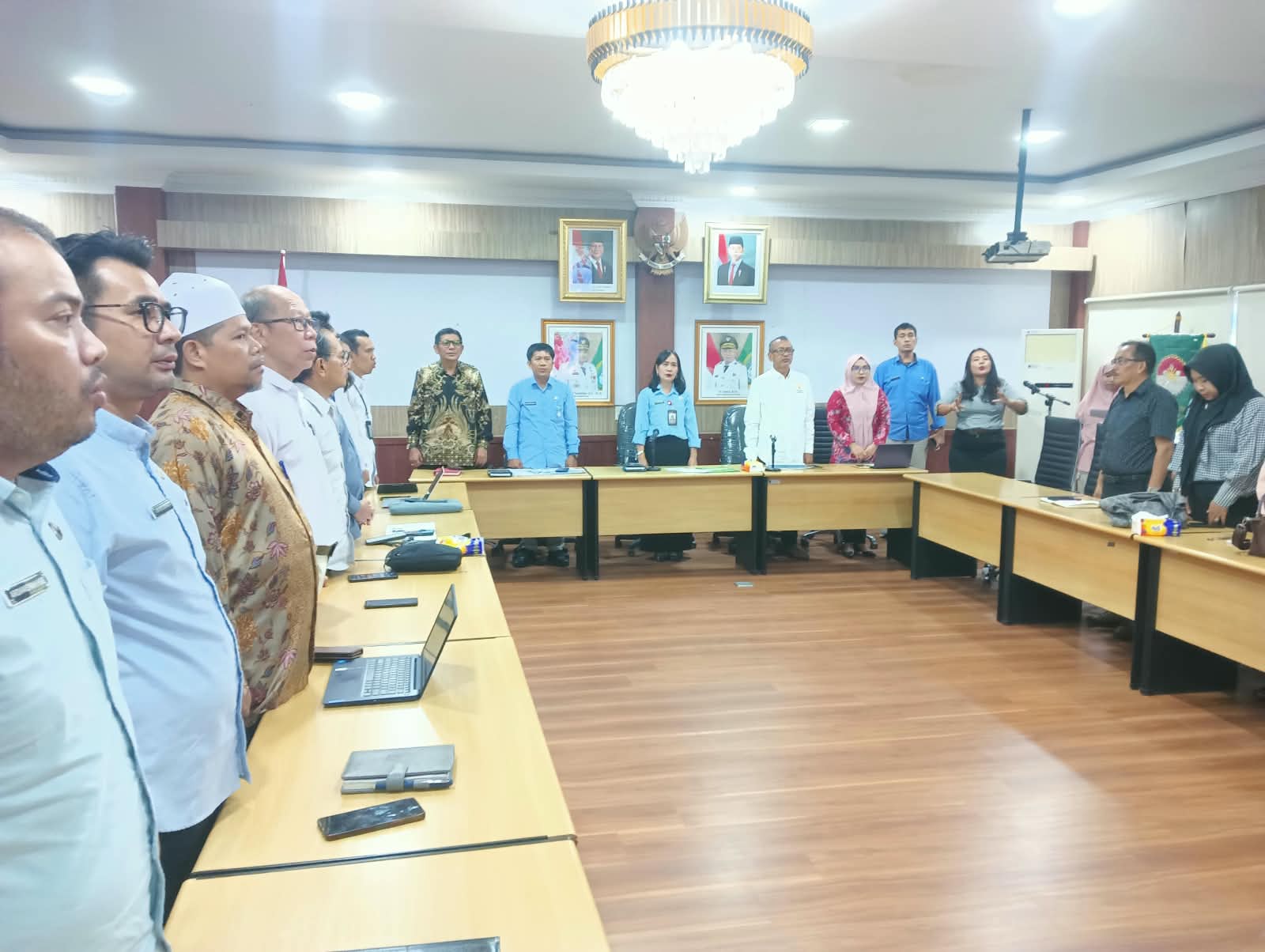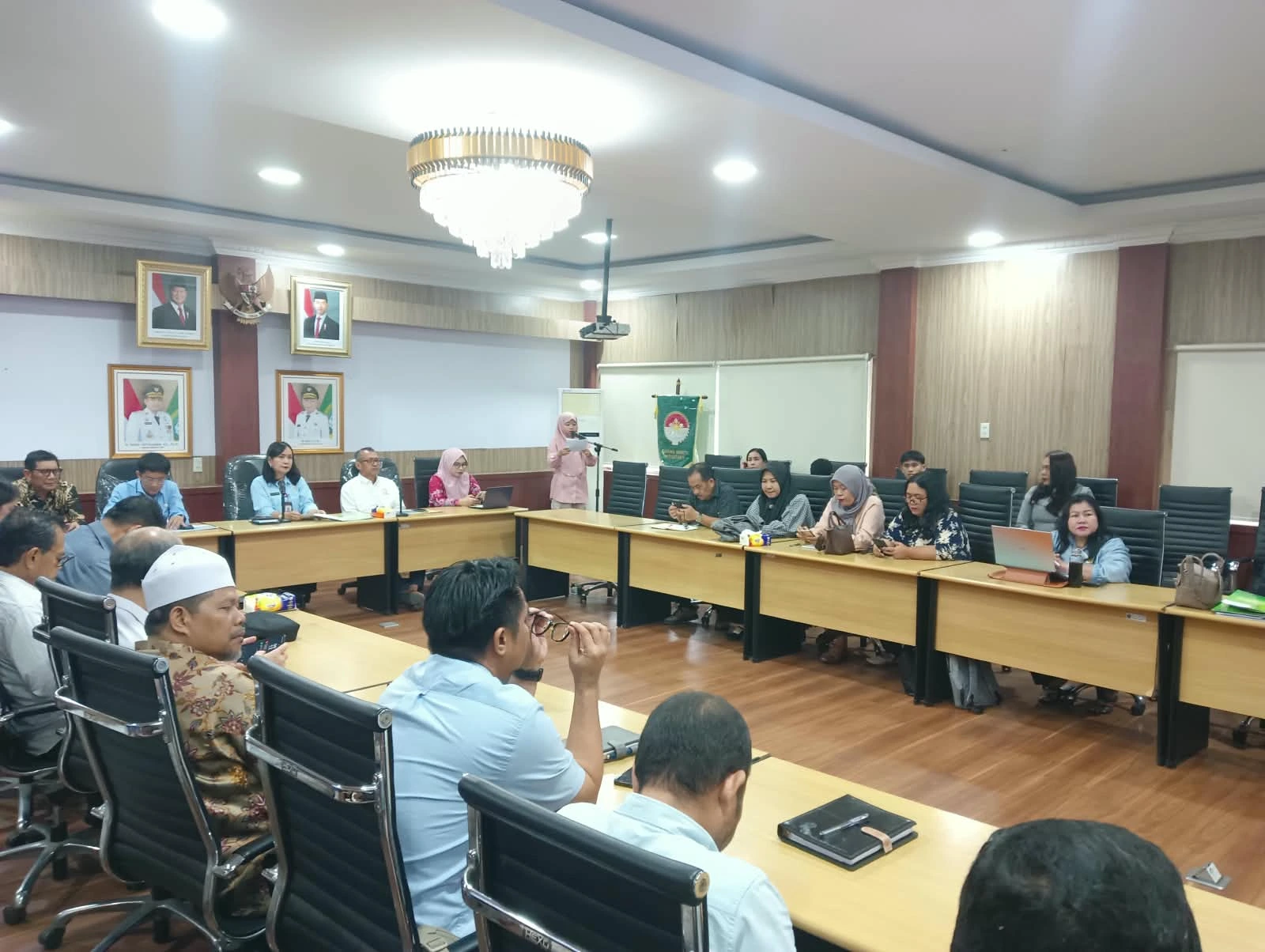
Medan, October 20, 2026 – The Faculty of Economics and Business, Universitas Sumatera Utara (FEB USU), continues to strengthen its academic contribution to supporting the formulation of regional development policies. One manifestation of this contribution is the involvement of its academic representatives in the 2026–2028 North Sumatra Provincial Wage Council, which is discussing recommendations and considerations regarding the proposed 2027 North Sumatra Provincial Minimum Wage (UMP).
Irsad Lubis, S.E., M.Soc.Sc., Ph.D., an academic in the field of Economics at FEB USU, plays an important role in highlighting the contribution of economic expertise to wage policy discussions aimed at promoting workers’ welfare, business sustainability, and inclusive regional economic growth.
The second meeting of the North Sumatra Provincial Wage Council is scheduled to take place on Tuesday, October 20, 2026, at the Third-Floor Hall of the North Sumatra Provincial Manpower Office, located at Jalan Asrama No. 143, Medan. This meeting follows the initial session held on September 24, 2026, focusing on discussions concerning the draft recommendations and considerations of the Wage Council regarding the proposed 2027 North Sumatra Provincial Minimum Wage.
The forum involves various stakeholders, including the North Sumatra Provincial Department of Industry, Trade, Energy and Mineral Resources; the Economic Bureau of the North Sumatra Provincial Regional Secretariat; the Faculty of Law at USU; FEB USU; and the Indonesian Chamber of Commerce and Industry (KADIN) of North Sumatra.
Strengthening Wage Policies Through Economic Research
From an economic perspective, the determination of minimum wages is a policy instrument with implications for workers’ purchasing power, production costs, labor productivity, employment opportunities, and regional economic competitiveness.
The presence of academics such as Irsad Lubis, S.E., M.Soc.Sc., Ph.D., holds strategic significance in encouraging wage policy discussions that comprehensively consider prevailing economic conditions. A data-driven approach supported by scientific research is essential to ensure that formulated policies maintain a balance between protecting workers’ welfare and sustaining business activities.
This academic perspective is also important in ensuring that minimum wage discussions go beyond nominal wage adjustments by taking into account inflation dynamics, labor market conditions, productivity, and the capacity of the regional economy to create quality employment opportunities.
Supporting the Achievement of the Sustainable Development Goals (SDGs)
Wage policy discussions are closely linked to the sustainable development agenda, particularly SDG 8: Decent Work and Economic Growth. Balanced wage policies are expected to support worker protection, improve job quality, and promote inclusive and sustainable economic growth.
Furthermore, this agenda is also related to SDG 10: Reduced Inequalities, particularly in promoting economic policies that consider income distribution and more equitable opportunities to achieve prosperity. In this context, wage policies need to be carefully assessed to ensure their contribution to reducing inequality without overlooking labor market dynamics.
The involvement of local governments, academics, and the business sector also reflects the spirit of SDG 17: Partnerships for the Goals, which emphasizes the importance of cross-sector collaboration in achieving sustainable development.
FEB USU Academics' Contribution to Regional Development
The participation of FEB USU academics in public policy forums demonstrates the importance of strengthening the relationship between higher education institutions and local governments in developing policies supported by scientific analysis.
As an academic in the field of Economics, Irsad Lubis, S.E., M.Soc.Sc., Ph.D., represents the importance of economic expertise in bridging academic research with the needs of public policy formulation, particularly in matters concerning employment, public welfare, and regional economic development.
Through academic contributions and collaboration with various stakeholders, FEB USU is expected to continue playing an active role in supporting regional economic policies that are equitable, inclusive, and oriented toward achieving the Sustainable Development Goals.
This activity further reinforces the commitment of higher education institutions to delivering tangible benefits of scientific knowledge to society, particularly in promoting decent work, improving public welfare, and fostering sustainable economic development in North Sumatra.