


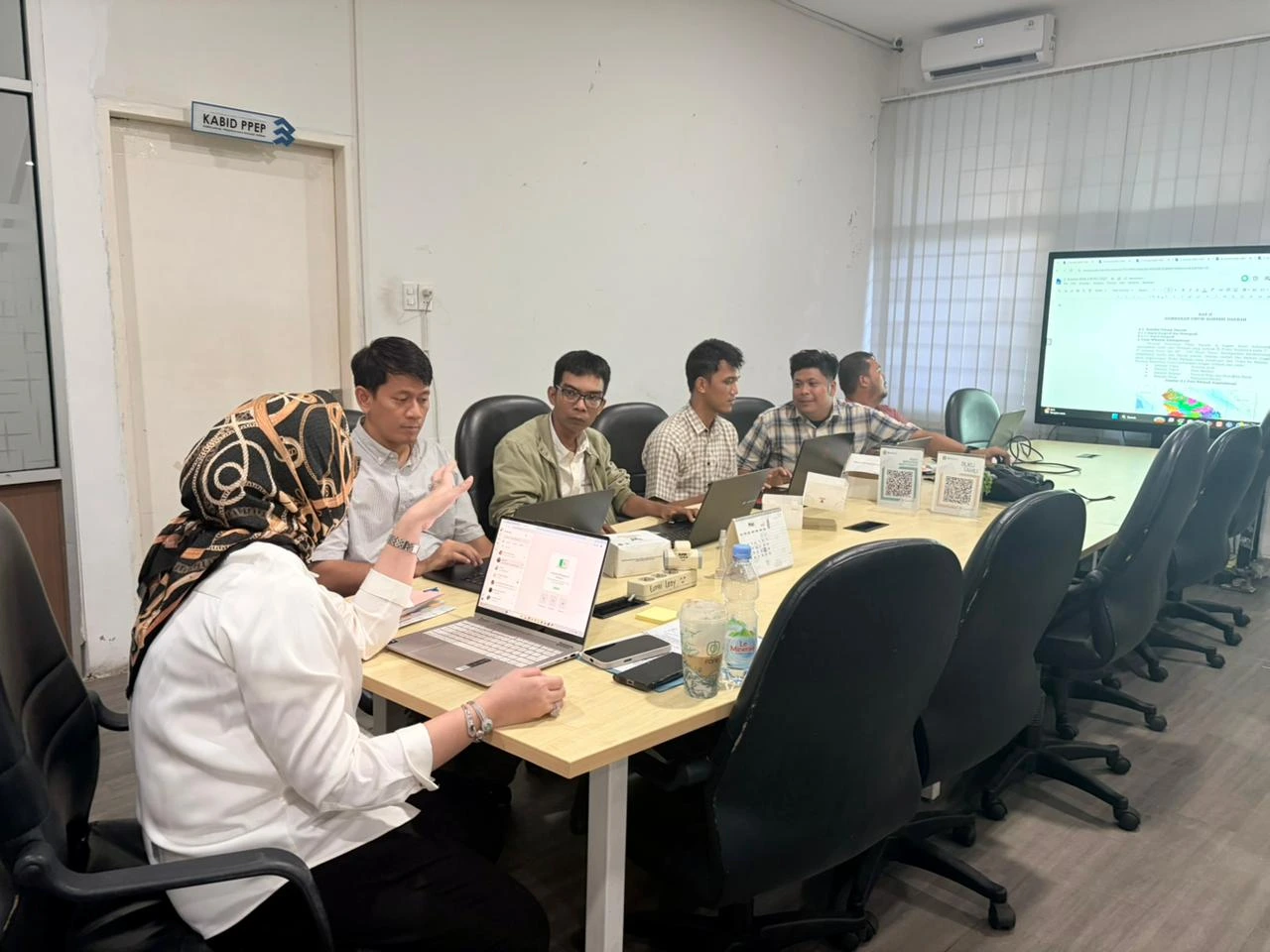
MEDAN – Academics from the Faculty of Economics and Business, Universitas Sumatera Utara (FEB USU), together with an academic from Universitas Negeri Medan (Unimed), contributed to the Preparation of North Sumatra Province's 2027 Regional Government Work Plan (Rencana Kerja Pemerintah Daerah, RKPD) in collaboration with the Regional Development Planning, Research, and Innovation Agency (Bapperida) of North Sumatra Province. The activity, held on Wednesday, June 3, 2026, represented an effort to strengthen the quality of regional development planning through collaboration between government institutions and universities.
The participating academics included Wahyu Sugeng Imam Soeparno, S.E., M.Si., Head of the Undergraduate Study Program in Development Economics at FEB USU; Dr. Arif Rahman, S.E., M.Ec.Dev., Head of the Undergraduate Study Program in Islamic Economics at FEB USU; Dr. Lucky Satria Pratama, S.E., M.Si., a lecturer in the Economics Study Program at the Faculty of Economics, Universitas Negeri Medan; Khairul Ali Hutasuhut, S.E., M.Si., a lecturer in the Undergraduate Study Program in Islamic Economics at FEB USU; and Ishbir Mujahid Adha, S.E., M.Si., a lecturer in the Undergraduate Management Study Program at FEB USU.
The preparation of the 2027 RKPD plays a strategic role in supporting the formulation of North Sumatra's annual regional development policies. As a one-year development planning document, the RKPD provides a framework for determining development priorities, performance targets, government programs, and activities, while serving as an important reference for regional budgeting policies.
The preparation of North Sumatra Province's 2027 RKPD is also closely aligned with the province's 2025–2029 Regional Medium-Term Development Plan (RPJMD). Accordingly, the planning process must consider consistency with medium-term development policies, evolving socioeconomic conditions, community needs, and national and regional development priorities.
Within this context, academic contributions are expected to strengthen analytical quality and evidence-based approaches to development planning. The utilization of economic data, development indicators, and policy research is essential for supporting the formulation of measurable, effective, and contextually relevant regional development programs.
The involvement of academics specializing in development economics, Islamic economics, economics, and management also demonstrates the importance of multidisciplinary approaches to development planning. These academic perspectives can complement one another in analyzing economic growth, regional productivity, investment, employment, priority economic sectors, and development policy effectiveness.
The participation of Dr. Arif Rahman and Khairul Ali Hutasuhut from the Undergraduate Study Program in Islamic Economics at FEB USU highlights the relevance of Islamic economic perspectives to inclusive and equitable regional development. Principles of economic justice, equitable welfare distribution, community empowerment, and responsible resource utilization can provide complementary perspectives in formulating development policies that prioritize societal well-being.
Meanwhile, the involvement of Wahyu Sugeng Imam Soeparno, Dr. Lucky Satria Pratama, and Ishbir Mujahid Adha strengthens interdisciplinary academic collaboration in supporting regional economic development planning. Such synergy reflects the application of university expertise to policy analysis, development governance, and the preparation of programs focused on achieving regional performance indicators.
Through this initiative, the preparation of North Sumatra Province's 2027 RKPD is expected to produce a more comprehensive, adaptive, and responsive development planning document. Collaboration between Bapperida and university academics also emphasizes the importance of partnerships between government and higher education institutions in promoting evidence-based public policymaking.
Academic participation in the initiative also reflects the implementation of the Three Pillars of Higher Education (Tri Dharma Perguruan Tinggi), particularly through the application of research findings, academic expertise, and professional knowledge to regional development. The involvement of universities is expected to provide additional value in formulating development plans that address not only economic targets but also community welfare and long-term sustainability.
The initiative also aligns with the Sustainable Development Goals (SDGs), particularly SDG 8 (Decent Work and Economic Growth) by supporting development policies that promote productive economic growth, investment, and employment opportunities; SDG 9 (Industry, Innovation, and Infrastructure) through stronger planning for infrastructure and priority economic sectors; SDG 10 (Reduced Inequalities) by promoting the equitable distribution of development benefits across communities and districts; SDG 16 (Peace, Justice, and Strong Institutions) by strengthening data-driven, transparent, and accountable development governance; and SDG 17 (Partnerships for the Goals) through strategic collaboration between regional government institutions and universities. This partnership is expected to contribute to more inclusive, focused, and sustainable regional development planning in North Sumatra Province for 2027.