


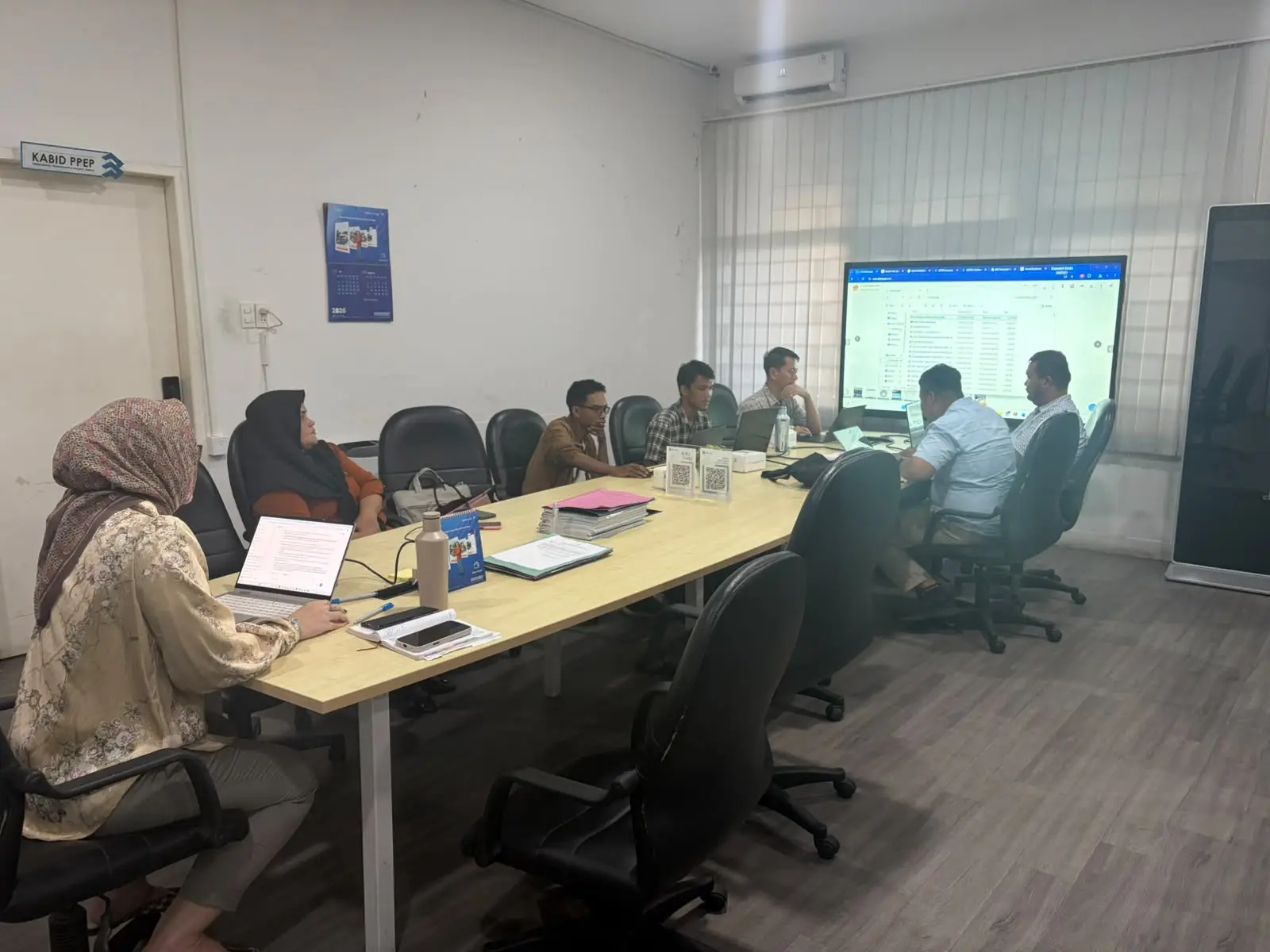
MEDAN – Dr. Arif Rahman, S.E., M.Ec.Dev., Head of the Undergraduate Study Program in Islamic Economics at the Faculty of Economics and Business, Universitas Sumatera Utara (FEB USU), alongside Khairul Ali Hutasuhut, S.E., M.Si., a lecturer in the same study program, contributed to the preparation and finalization discussions of the Revised 2026 North Sumatra Regional Government Work Plan (Rencana Kerja Pemerintah Daerah, RKPD). One of the discussion sessions took place on Tuesday, July 7, 2026, involving academics and the Regional Development Planning, Research, and Innovation Agency (Bapperida) of North Sumatra Province.
The initiative formed part of broader efforts to enhance the quality of regional development planning through collaboration between the provincial government and higher education institutions. The revision of the 2026 RKPD serves as an important planning instrument for adjusting development priorities, government programs, and activities in response to evolving regional development needs and socioeconomic conditions in North Sumatra.
The academics involved included Dr. Wahyu Ario Pratomo, a lecturer in the Doctoral Program in Economics at FEB USU; Ishbir Mujahid Adha, S.E., M.Si., a lecturer in the Undergraduate Management Study Program at FEB USU; Dr. Lucky Satria Pratama, S.E., M.Si., a lecturer in the Economics Study Program at the Faculty of Economics, Universitas Negeri Medan; as well as Dr. Arif Rahman, S.E., M.Ec.Dev., and Khairul Ali Hutasuhut, S.E., M.Si., from the Undergraduate Study Program in Islamic Economics at FEB USU.
The collaboration was also part of the implementation of the Revised 2026 North Sumatra RKPD preparation project under a Type II Self-Managed Contract (Swakelola Tipe II) between Bapperida of North Sumatra Province and the Institute for Research and Community Service (Lembaga Penelitian dan Pengabdian kepada Masyarakat, LPPM) of Universitas Sumatera Utara. This institutional partnership reflects the application of academic expertise to support the preparation of government development planning documents.
In preparing the revised RKPD, data-driven approaches and policy analysis play essential roles in ensuring consistency among development needs, program priorities, implementation capacity, and regional budgeting. Discussions and document refinement form part of the planning process intended to produce development policies that are more focused, measurable, and responsive to changing regional circumstances.
The involvement of Dr. Arif Rahman and Khairul Ali Hutasuhut as academics from the Undergraduate Study Program in Islamic Economics at FEB USU highlights the potential contribution of Islamic economics expertise to regional development planning. Islamic economic perspectives are relevant to development approaches emphasizing equitable welfare distribution, economic justice, productive economic activities, and the efficient and sustainable utilization of resources.
The participation of academics from different study programs and universities also demonstrates the importance of multidisciplinary approaches to development planning. Expertise in economics, management, development economics, and Islamic economics can provide complementary academic perspectives on regional development challenges, including economic growth, community welfare, human capital development, and public policy effectiveness.
Through this initiative, the preparation of the Revised 2026 North Sumatra RKPD is expected to result in a more comprehensive, adaptive, and development-oriented planning document. The involvement of higher education institutions also reflects the implementation of the Three Pillars of Higher Education (Tri Dharma Perguruan Tinggi), particularly through the application of research, academic expertise, and community-oriented knowledge to support public policymaking.
The initiative also aligns with the Sustainable Development Goals (SDGs), particularly SDG 8 (Decent Work and Economic Growth) by supporting development policies that promote inclusive and productive economic growth; SDG 9 (Industry, Innovation, and Infrastructure) by encouraging research- and innovation-based approaches to regional planning; SDG 11 (Sustainable Cities and Communities) through support for integrated regional development planning; SDG 16 (Peace, Justice, and Strong Institutions) by promoting evidence-based and accountable planning processes; and SDG 17 (Partnerships for the Goals) by strengthening collaboration between regional government institutions and universities. This partnership is expected to contribute to more inclusive, sustainable, and welfare-oriented development governance in North Sumatra Province.