


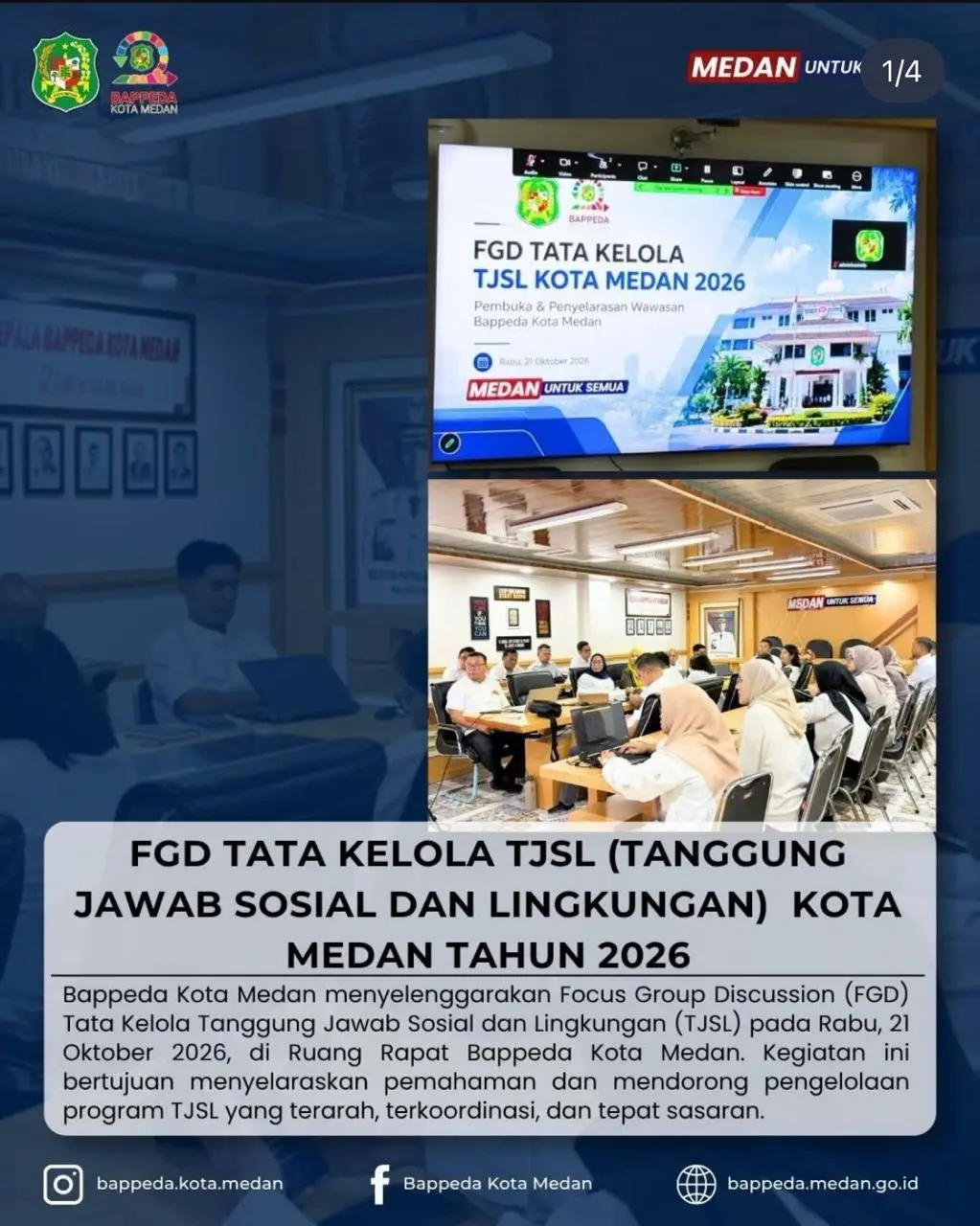
Dr. Paidi, S.E., M.Si., a Lecturer in the Undergraduate Development Economics Study Program at Universitas Sumatera Utara (USU), participated in the Focus Group Discussion (FGD) on the Governance of Social and Environmental Responsibility (TJSL) in Medan City 2026, organized by the Medan City Regional Development Planning Agency (Bappeda Kota Medan) on Wednesday, October 21, 2026, at the Bappeda Medan City Meeting Room.
The event, themed “FGD on TJSL Governance in Medan City 2026,” served as a forum to align understanding and promote the management of Social and Environmental Responsibility (TJSL) programs in a more targeted, coordinated, and effective manner.
The FGD provided a platform for stakeholders to discuss the strengthening of TJSL program governance in Medan City. Through effective coordination, TJSL programs are expected to become increasingly aligned with community needs and regional development priorities.
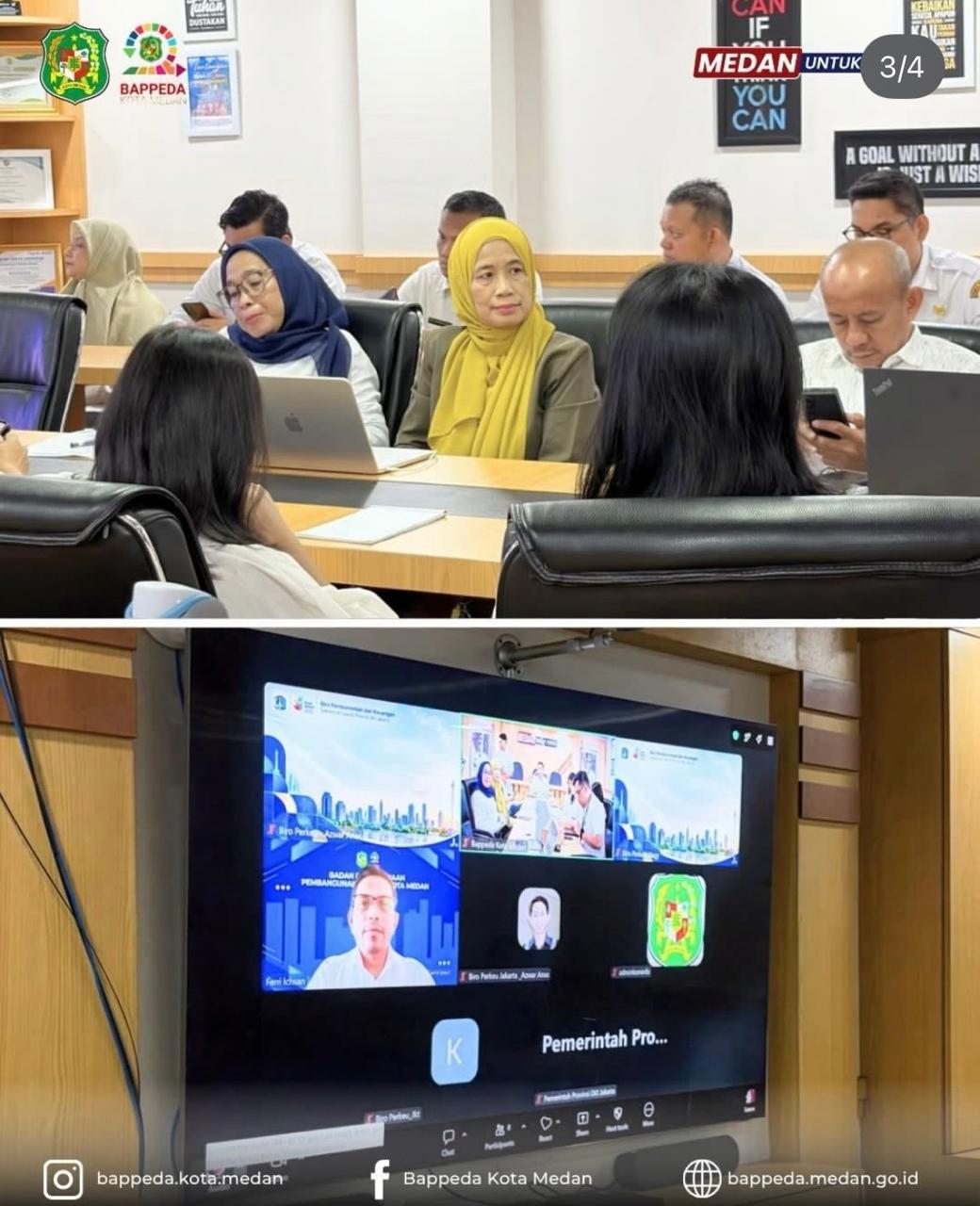
As a Lecturer in the Undergraduate Development Economics Study Program at Universitas Sumatera Utara (USU), Dr. Paidi's participation in the event represents the contribution of academics to engaging with and providing perspectives on various economic and social development issues at the regional level.
The involvement of academics in discussions on TJSL governance also plays an important role in strengthening synergy among local government, the business sector, higher education institutions, and communities. Such collaboration is essential to ensure that TJSL programs are managed effectively, appropriately targeted, and capable of generating sustainable impacts.
From an economic development perspective, sound TJSL governance is expected not only to focus on the implementation of social programs but also to support community empowerment, environmental quality improvement, and the strengthening of sustainable regional development.
Supporting the Achievement of the Sustainable Development Goals (SDGs)
Strengthening TJSL governance is also related to the Sustainable Development Goals (SDGs). Several SDGs relevant to the substance of the activity include:
SDG 11 – Sustainable Cities and Communities
Well-targeted TJSL management can contribute to the development of urban areas that are inclusive, safe, resilient, and sustainable.
SDG 12 – Responsible Consumption and Production
TJSL programs that incorporate social and environmental considerations can encourage more responsible development practices and the sustainable use of resources.
SDG 16 – Peace, Justice and Strong Institutions
Strengthening governance, coordination, accountability, and institutional capacity in TJSL management is in line with efforts to build effective and inclusive institutions.
SDG 17 – Partnerships for the Goals
Collaboration among government, the business sector, higher education institutions, and communities is an important element in supporting the achievement of sustainable development.
Through the FGD, TJSL governance in Medan City is expected to become more focused and integrated, enabling it to generate tangible benefits for communities while supporting the broader sustainable development agenda.
The participation of Dr. Paidi, S.E., M.Si., a Lecturer in the Undergraduate Development Economics Study Program at USU, in the forum also reflects the role of higher education institutions in contributing academic perspectives and ideas to regional development, particularly in promoting effective, collaborative, and sustainable program governance.