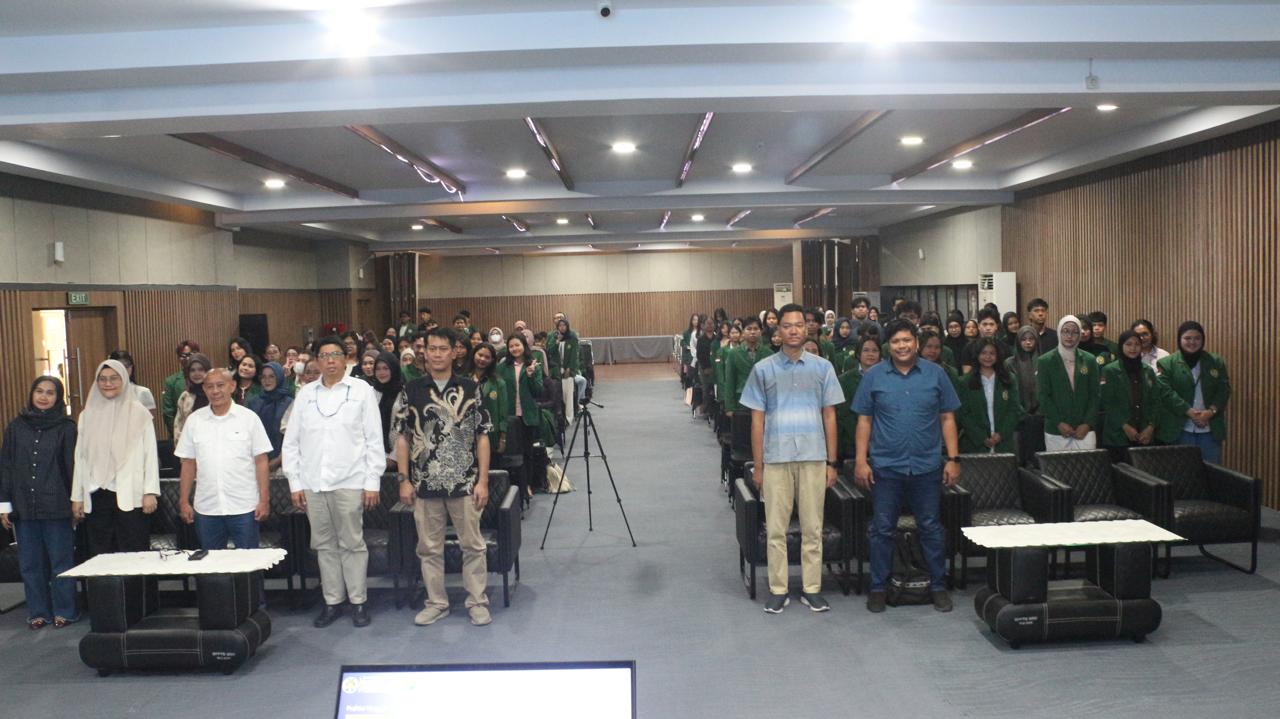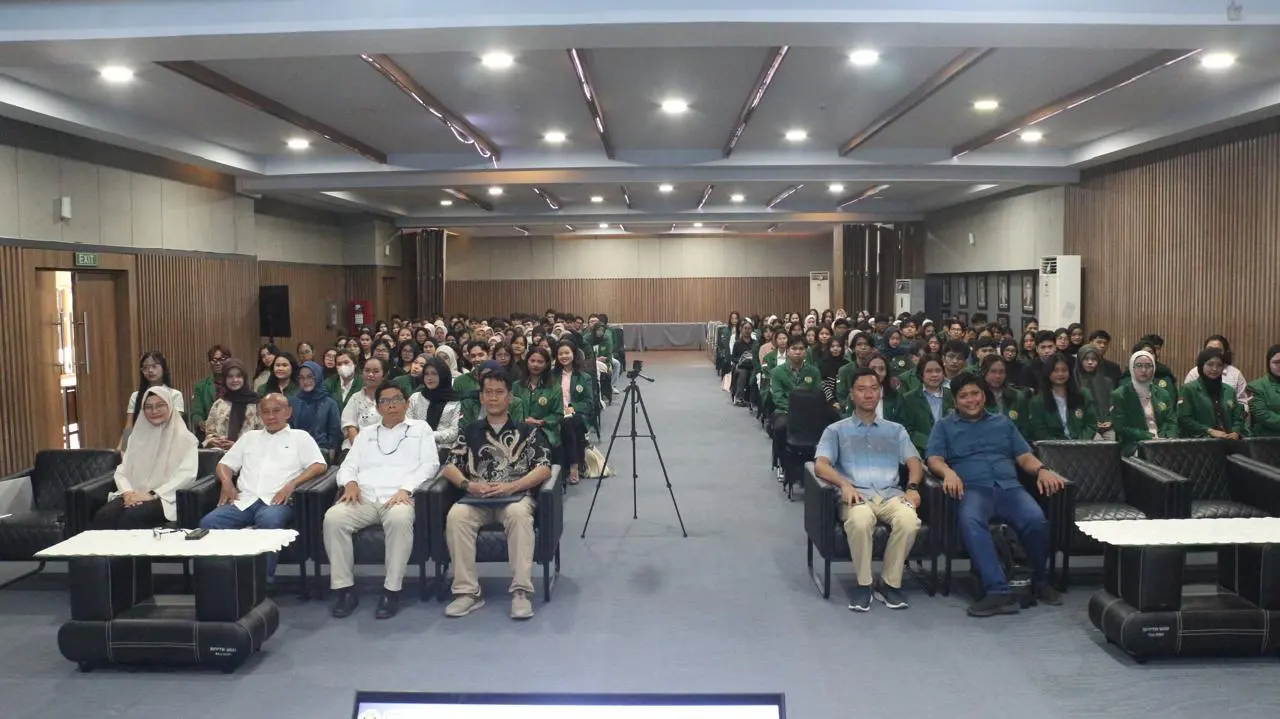
Head of the Bachelor’s Degree Program in Development Economics, Faculty of Economics and Business, Universitas Sumatera Utara (FEB USU), Wahyu Sugeng Imam Soeparno, S., M.Si., together with several lecturers from the Development Economics Study Program, attended the FEB USU 2026 Public Lecture themed “Monetary Policy”, held on November 4, 2026.
The public lecture featured Darius Tirtosuharto, Senior Economist at the Bank Indonesia Representative Office of North Sumatra, as the keynote speaker. The event provided an opportunity for the FEB USU academic community to gain direct insights from a practitioner regarding monetary policy dynamics and the development of the Indonesian economy.
In his presentation, Darius Tirtosuharto discussed various aspects of monetary policy, including the concepts and objectives of monetary policy, the functions and monetary policy trilemma, monetary policy instruments and transmission mechanisms, the Bank Indonesia monetary policy framework, and the Bank Indonesia policy mix. The presentation also covered recent developments in monetary policy, its impact on inflation, and the effects of digitalization on monetary policy.
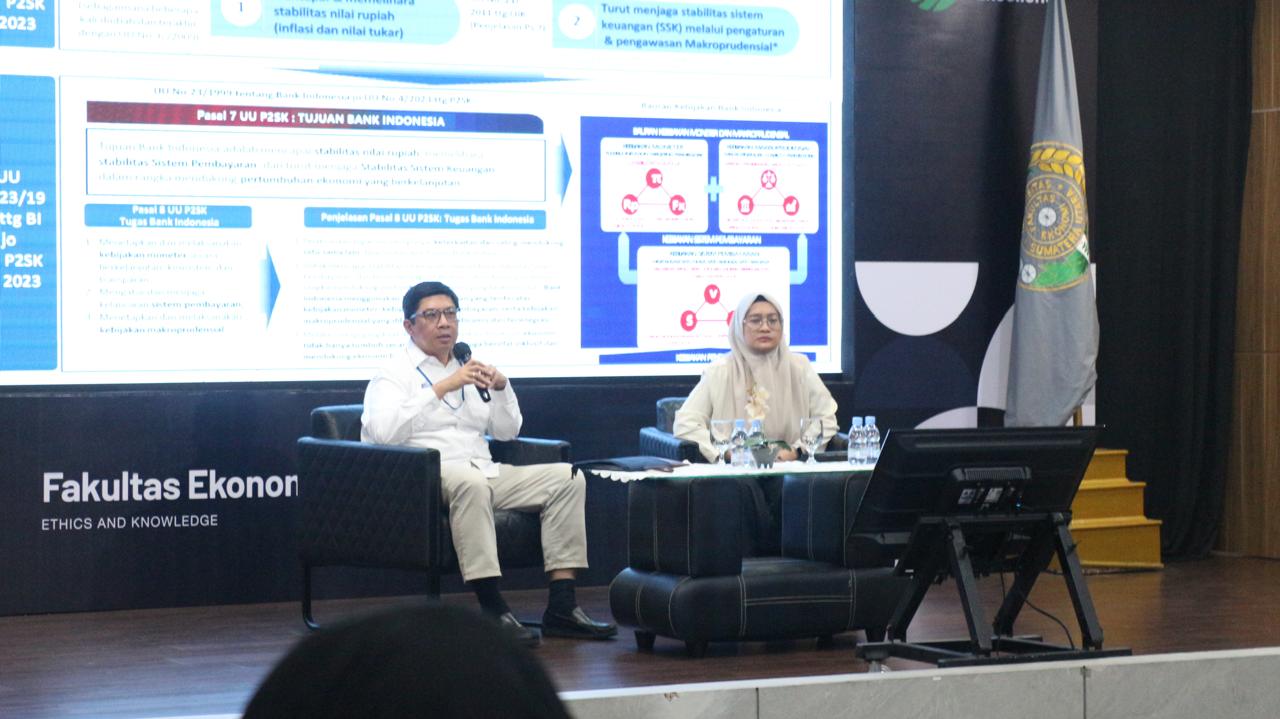
Monetary policy was explained as a policy implemented by a monetary authority or central bank through the management of monetary aggregates, interest rates, and other policies to achieve macroeconomic stability. Ultimately, such policies are aimed at contributing to the improvement of social welfare.
The discussion of monetary policy instruments was also an important part of the public lecture. These instruments include policy interest rates, open market operations, standing facilities, and minimum reserve requirements, as well as several non-conventional instruments such as liquidity provision, large-scale asset purchases, and forward guidance.
Participants also gained an understanding of the monetary policy transmission mechanism, which illustrates how central bank policies influence economic and financial activities in order to achieve established objectives. This process involves interactions among the central bank, the financial sector, economic actors, and other policy authorities, including the government.
In the context of recent economic developments, the public lecture also reviewed the outcomes of the Bank Indonesia Board of Governors Meeting in October 2026. Indonesia’s economy was described as remaining resilient, with household consumption and investment continuing to grow positively. Meanwhile, Consumer Price Index (CPI) inflation remained within the target range, while banking intermediation remained strong.
Regarding monetary policy, Bank Indonesia maintained the BI Rate at 5.75 percent, accompanied by strengthened macroprudential policies to encourage credit and financing for the real sector while maintaining financial system stability.
The participation of the Head of the Study Program and lecturers from the Bachelor’s Degree Program in Development Economics, FEB USU, reflects the program’s commitment to strengthening the connection between academic learning and current economic policy developments. For the Development Economics Study Program, an understanding of monetary policy is highly relevant to broadening the perspectives of lecturers and students on macroeconomic issues, particularly inflation, economic growth, exchange rate stability, the financial system, and Bank Indonesia’s policies.
The public lecture also highlighted the development of digitalization. The presentation demonstrated that digitalization can improve economic efficiency and support the effectiveness of monetary policy. The study presented during the lecture indicated that digitalization can strengthen the impact of monetary expansion on economic growth through increased economic efficiency and broader access to financial services.
Through this activity, the Bachelor’s Degree Program in Development Economics, FEB USU, continues to strengthen the academic knowledge of its academic community through engagement with practitioners and policymakers. The activity is expected to enrich understanding of the implementation of economic policies while supporting a learning process that responds to developments in the national economy.
Supporting the Achievement of the SDGs
The FEB USU 2026 Public Lecture themed “Monetary Policy” also contributes to the achievement of several Sustainable Development Goals (SDGs), including:
SDG 4 – Quality Education, through strengthening the quality of learning and expanding the academic knowledge of the university community.
SDG 8 – Decent Work and Economic Growth, through enhancing understanding of economic policy, macroeconomic stability, economic growth, and employment opportunities.
SDG 9 – Industry, Innovation and Infrastructure, through discussions on digitalization and its contribution to economic efficiency and the effectiveness of monetary policy.