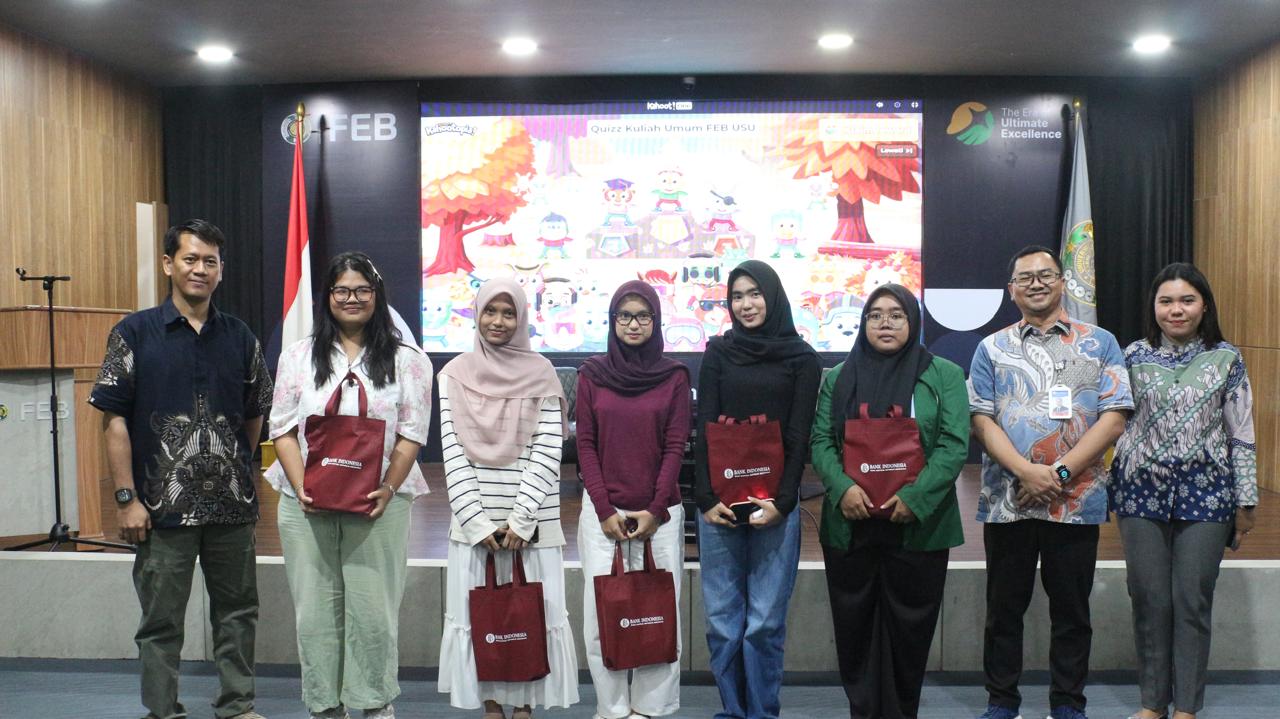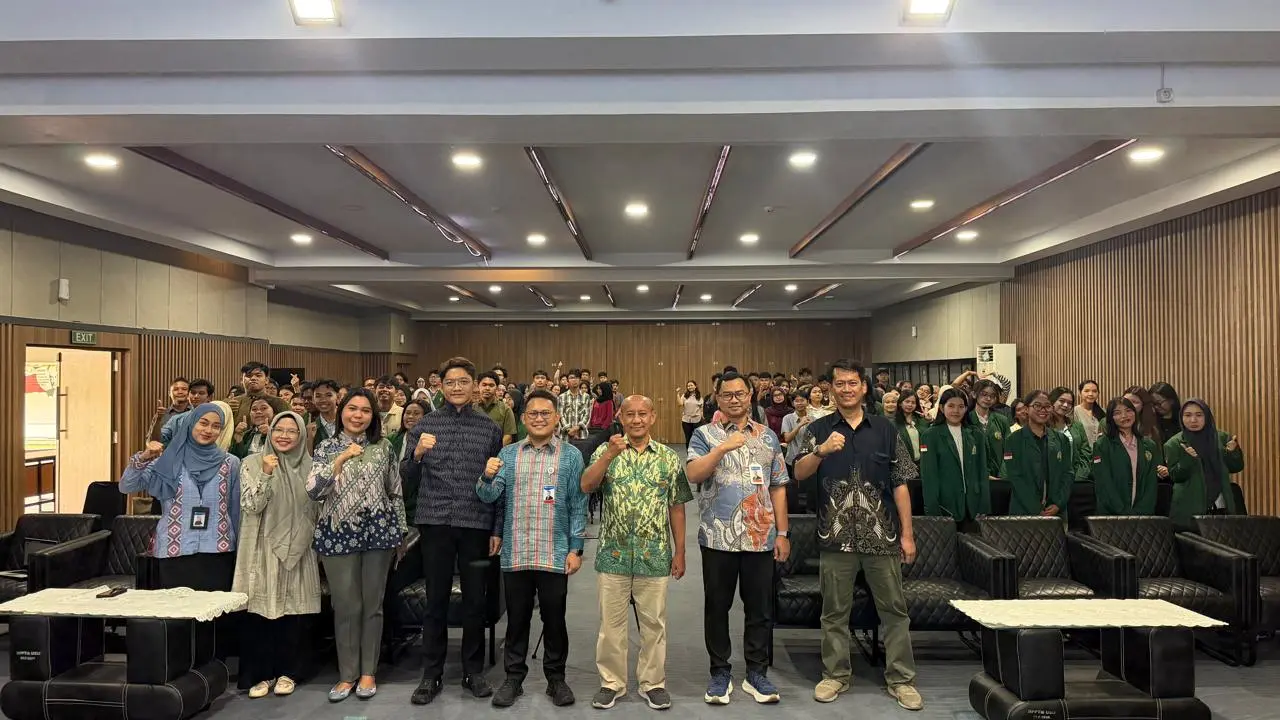
The Bachelor’s Degree Program in Development Economics, Faculty of Economics and Business (FEB), Universitas Sumatera Utara (USU), continues to strengthen practice-based learning by organizing a Central Banking Public Lecture featuring a practitioner from Bank Indonesia. The activity focused on the topic “Macroprudential Policy” and was held on Friday, November 13, 2026, at the Prof. Dr. Suhadji Hadibroto Hall, FEB USU.
The public lecture featured Abdul Khalim, S.Si., M.E., Deputy Director of the Bank Indonesia Representative Office for North Sumatra, as the practitioner speaker. His participation provided students with an opportunity to gain direct insights into the implementation of monetary and macroprudential policies in maintaining financial system stability.
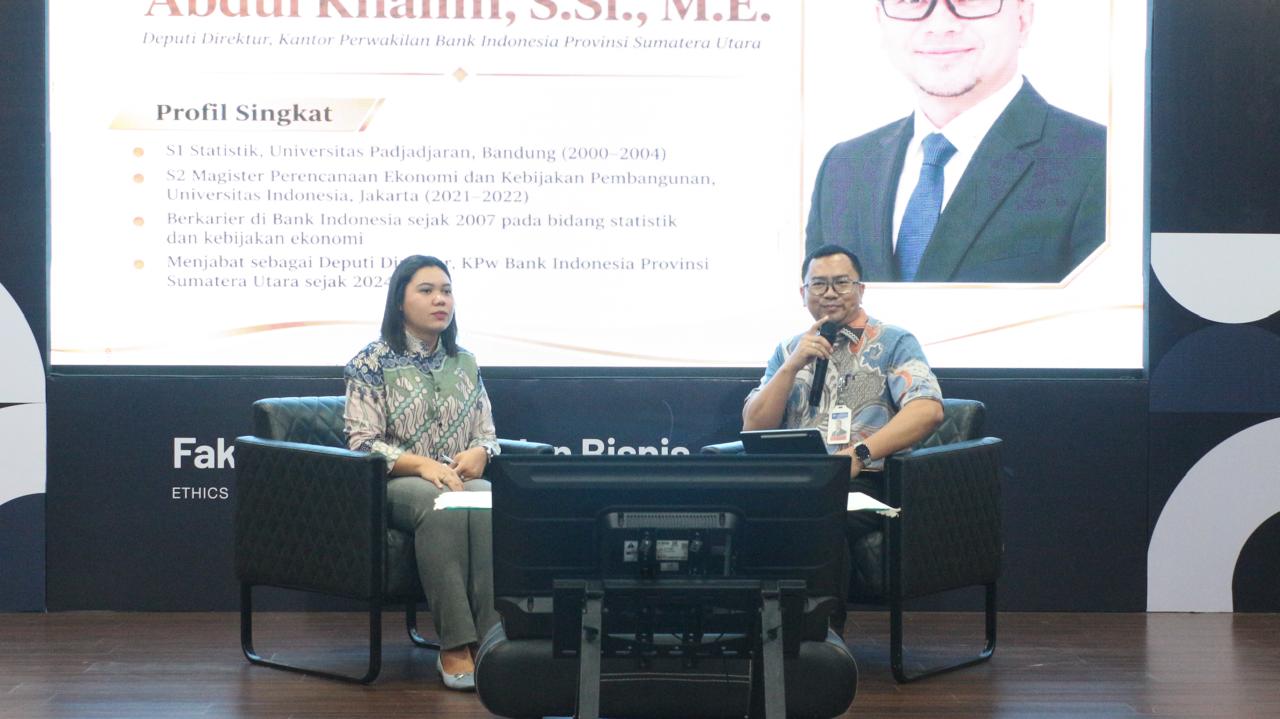
The activity was designed to strengthen students’ understanding by connecting economic theories learned in the classroom with practical developments in economic and financial policy. Through discussions on macroprudential policy, students were introduced to issues related to financial system stability, systemic risks, liquidity, crisis mitigation, and coordination among financial authorities.
The presence of practitioners from Bank Indonesia also provided students with a broader perspective on the role of central banks in maintaining economic and financial stability. The knowledge and practical insights shared during the session are expected to enrich students’ academic understanding while preparing them to respond to developments and challenges in the financial sector.
Head of the Bachelor’s Degree Program in Development Economics, Wahyu Sugeng Imam Soeparno, S.E., M.Si., together with lecturers within the program, supported the implementation of the activity as part of the program’s commitment to strengthening learning through collaboration with practitioners and institutions.
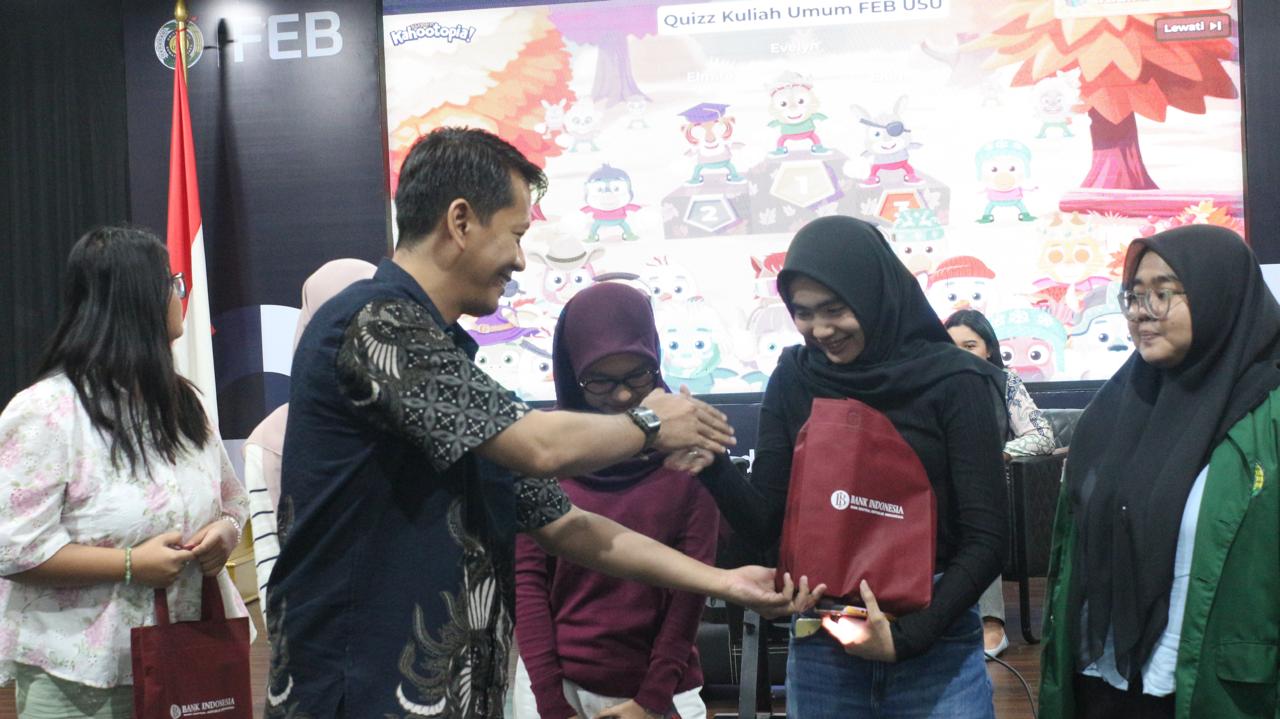
The Central Banking Public Lecture also reflects the commitment of the Bachelor’s Degree Program in Development Economics, FEB USU, to supporting the achievement of the Sustainable Development Goals (SDGs), particularly SDG 4: Quality Education, through relevant and practice-oriented learning; SDG 8: Decent Work and Economic Growth, through the development of students’ competencies and understanding of economic and financial issues; and SDG 17: Partnerships for the Goals, through collaboration between higher education institutions and Bank Indonesia.
Through activities such as this, the Bachelor’s Degree Program in Development Economics, FEB USU, continues to foster meaningful academic partnerships and provide students with learning experiences that bridge theoretical knowledge and professional practice.